REVIEW · SEATTLE
Seattle Locks Cruise
Book on Viator →Operated by Argosy Cruises · Bookable on Viator
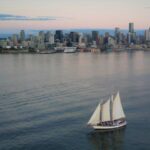
Seattle’s water roads can change your whole trip. This one-way cruise mixes Ballard Locks engineering with classic Seattle scenery—floating homes, shipyards, and those postcard views from the Space Needle to the central waterfront.
What I like most is the way the ride turns into a moving story. You get live onboard commentary that connects neighborhoods and landmarks, not just pretty scenery. Second, the photo opportunities are practical: you’re on the water long enough to frame the skyline and landmark views without rushing.
One consideration: the cruise is one-way with two possible departure marinas, so your start and end points won’t be the same. If you don’t plan transport early, it can feel confusing—especially for parking.
In This Review
- Key things I’d watch for before you go
- Where to Start: Pier 54 vs AGC Marina on a One-Way Route
- Ballard Locks: The Main Event You Can See Up Close
- Lake Union’s Floating Homes and Shipyard World
- Gas Works Park From the Water: A Coal Plant Turned Hangout
- Fremont Bridge and the Ship Canal Trail Views
- Fisherman’s Terminal: Working Boats, Maritime History, and Sea Life
- Puget Sound, West Point Lighthouse, and the Magnolia Calm
- Space Needle and Central Waterfront: The Photo Finish
- Live Narration Makes the Whole Route Make Sense
- Comfort on Board: Seating, Restrooms, and What to Bring
- Price and Value: Why About $63.28 for Two Hours Can Make Sense
- Who Should Book This Cruise (and Who Might Want Another Option)
- Should You Book the Seattle Locks Cruise?
- FAQ
- How long is the Seattle Locks cruise?
- Is the cruise one-way or round-trip?
- What’s included in the ticket price?
- What should I bring for the boat ride?
- Where can the cruise depart from?
- Can children ride for free?
Key things I’d watch for before you go
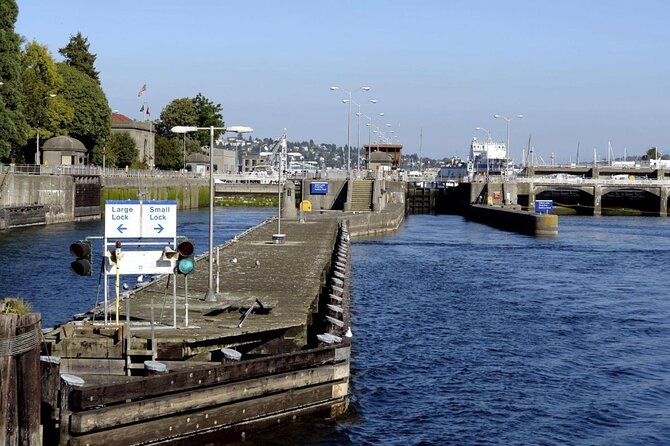
- Ballard Locks action: you’ll see the freshwater-to-saltwater change as the boat goes through.
- Live narration that helps you recognize what you’re passing, instead of guessing.
- Seattle skyline from the water with views of the Space Needle and central waterfront landmarks.
- A mix of neighborhoods: Lake Union, Ballard’s ship-and-trade side, Magnolia, and the Sound.
- Dress for temperature swings after the lock—many people feel it gets colder.
- One-way logistics: you end at a different central marina location than you board.
Where to Start: Pier 54 vs AGC Marina on a One-Way Route
This is a true one-way sightseeing cruise, not a loop. You start at one central Seattle marina and end at a different central Seattle waterfront spot. You can choose to depart from Pier 54 on the waterfront or from AGC Marina on Lake Union (your ticket subtitle tells you which).
That matters because it affects your morning plan. If you’re driving, one of the most common trip-killers is arriving at the right time but at the wrong place—or realizing too late that your ride back is needed from the end point. I’d treat it like a short water “day segment” with a transfer at the end, not like a round-trip harbor cruise.
The good news: the cruise is timed as a neat 2-hour window. You also get a maximum group size of 175, and the boat offers both indoor and outdoor seating. For visitors who want a highlight without a full half-day tour, this timing works well.
Also note: the boat has restrooms, and service animals are allowed. The route is near public transportation, so if you’re not using a car, you’ll likely manage the start and end with less stress.
You can also read our reviews of more boat tours in Seattle
Ballard Locks: The Main Event You Can See Up Close
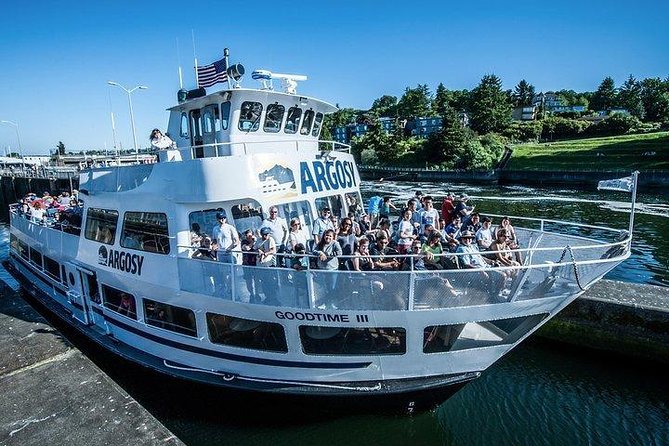
The star of this cruise is the Ballard Locks, where your boat is lowered about 20 feet (6 meters) from Lake Union’s freshwater level down toward the Puget Sound’s saltwater. This is part of a locking system that’s 100+ years old and operated by the U.S. Army Corps of Engineers.
What makes it special isn’t just that it’s “cool engineering.” It’s the moment when the water level changes and you can see how the whole system works in real time. It’s an experience that feels equal parts science, city history, and quiet spectacle.
If you like photos, the locks give you multiple angles: you’re close enough to sense scale, and you’re also moving through a very “Seattle” industrial-natural corridor. You’ll also want to keep your eyes up for water action—some departures seem to deliver extra wildlife moments, like salmon activity and occasional marine sightings.
One practical heads-up: the air can feel different as you transition into the saltwater area. A lot of people recommend bringing a jacket. Even on a sunny day, that deck breeze can turn chilly before long.
Lake Union’s Floating Homes and Shipyard World
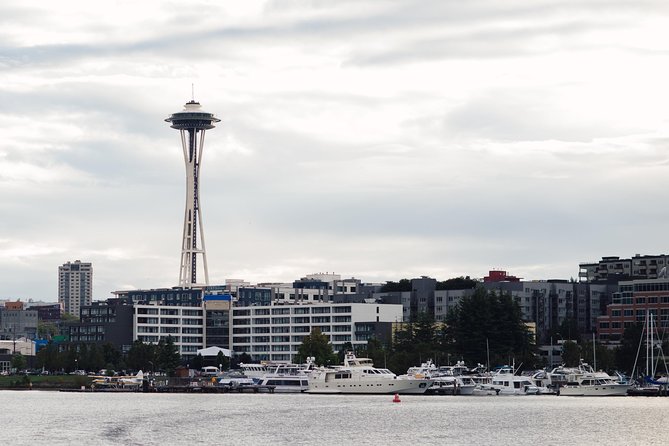
Between the waterfront energy and the locks, the cruise spends real time on Lake Union, a mix of tech-adjacent skyline views and working-water industries.
You’ll pass a full-service shipyard area where vessels are repaired and renovated, and you’ll see larger commercial fishing vessels being dry-docked. This part is worth paying attention to even if you’re not a ship-nerd. It shows another Seattle side: not just coffee-shop culture, but trade, maintenance, and labor that keeps the water economy running.
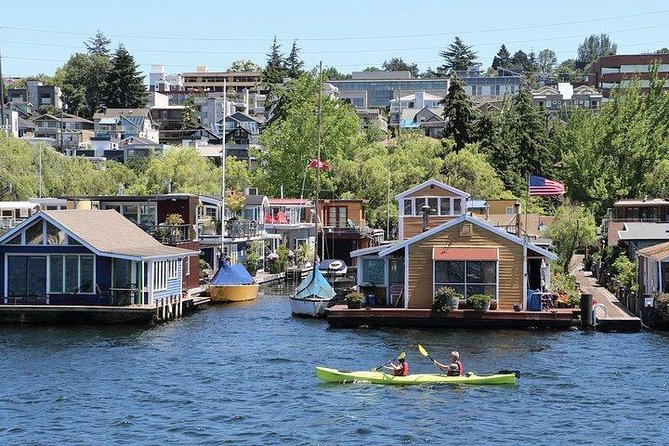
Then come the floating communities. Lake Union is famous for its floating home neighborhoods, and the cruise points out a variety of houseboats and exteriors—plus the famous floating home featured in the movie Sleepless in Seattle. Even if you haven’t seen the film, the look of these homes is instantly memorable: colorful, practical, and very tied to the water’s rhythms.
This is a good section for “slow looking.” If you’re with kids, it’s fun because there’s always something to spot. If you’re with adults, it’s great because it helps you understand that Seattle isn’t only built on land. It’s also built on the waterline.
Gas Works Park From the Water: A Coal Plant Turned Hangout
One of the most striking shoreline stops is Gas Works Park. You’ll pass views of this decommissioned coal gasification plant that later became a local social spot for hanging out, playing, and visiting.
I like this segment because the park is a reminder that Seattle changes its uses without erasing its shapes. You’re seeing industry leftovers turned into a place where people relax and watch the water. The cruise also connects it to pop culture—Gas Works Park served as a filming location for 10 Things I Hate About You.
If you care about photos, focus on the skyline and the shoreline textures together. It’s one of the places where the land-and-water mix feels extra Seattle.
Downside? Shorelines move past quickly on a boat. You’ll get views, but you won’t have the time to fully explore like you would on foot. Think of this as a “recognize it later” moment, not a replacement for a walk-through.
Fremont Bridge and the Ship Canal Trail Views
Next up is the Fremont Bridge, one of the busiest drawbridges in the U.S. You’ll pass through the decorated drawbridge area and you’ll be close enough to feel how tight the water-and-metal setup is.
This is also where the cruise adds a “how close can you get” thrill. If you’re traveling with someone who likes cities with big structures—this part does the job.
After that, you’ll cruise along the Lake Washington Ship Canal and follow the actual route of an abandoned railroad footpath that runs about 1.9 miles. From the boat you get views of Seattle’s historic neighborhoods and the maritime industrial areas around Ballard.
This section works because it shows the city’s layout in a way most visitors miss. From land, it’s hard to understand how these corridors cut through the city. From the water, the whole geometry clicks.



Fisherman’s Terminal: Working Boats, Maritime History, and Sea Life
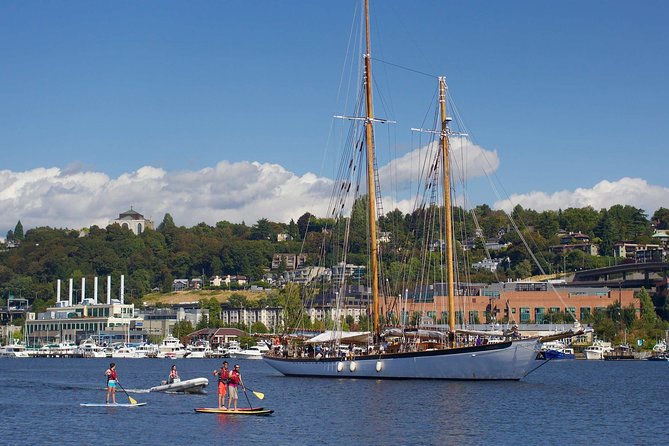
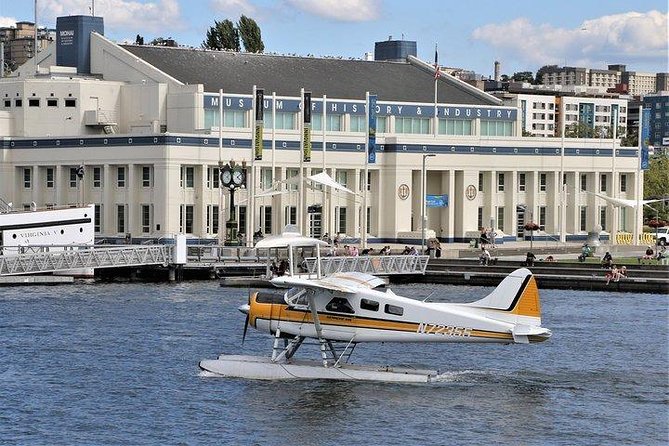
When the cruise reaches Fisherman’s Terminal, you’re back in Seattle’s working maritime lane. The terminal is run by the Port of Seattle, and it has housed hundreds of fishing vessels over the years. It’s also famously known for boats connected to the show Deadliest Catch.
What I find valuable here is context. It’s easy to think of fishing as a generic industry. On this cruise, you’re seeing the infrastructure that makes it possible: where boats are staged, where the working world concentrates.
Then watch the water. Some departures seem to include lively wildlife moments. People have reported seeing salmon jumping and also occasional sightings like a whale top, harbor seals, and grey herons. You can’t count on specific wildlife, but the water conditions on this route make “eyes up” a good strategy.
If you want the best chances for wildlife spotting, spend time outside on the deck when you can. Indoors is comfortable, but you’ll miss some of the “on the water” moments if you stay sealed in the cabin.
Puget Sound, West Point Lighthouse, and the Magnolia Calm
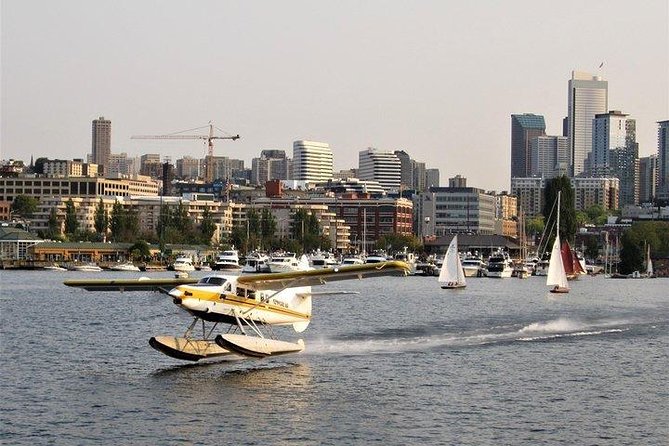
After the locks, the scenery opens up into Puget Sound territory. You’ll see views across an inland estuary about 95 miles long, and on clear days you might spot mountain range views such as the Olympics.
You’ll also pass the area around West Point Lighthouse on its beaches. The tour also emphasizes West Point Park, Seattle’s largest natural park at about 560 acres. This is the part that feels like the cruise slows down, even though you’re still moving. The coast turns more scenic than industrial.
And yes, you’ll be looking toward quieter surroundings compared to the busy shipyard world earlier. That shift makes the whole itinerary feel balanced: city machinery, then city nature.
If you’re someone who enjoys calm scenery in between city stops, this is the segment to stick with. Bring your jacket, take your time framing the horizon, and be ready for wildlife surprises if conditions are right.
Space Needle and Central Waterfront: The Photo Finish
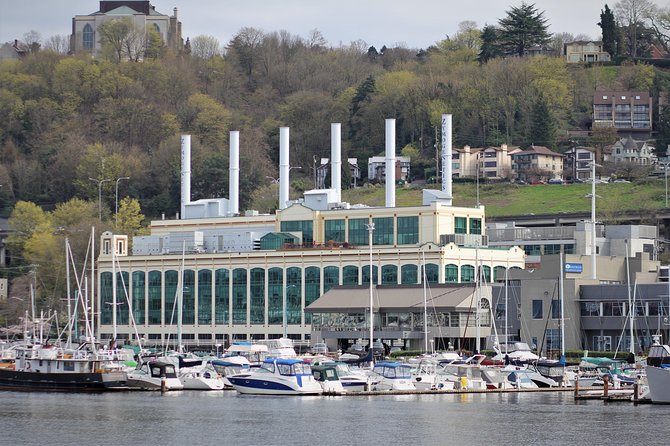
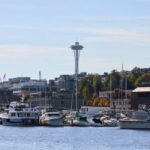
One of the reasons people love this cruise is that it doesn’t treat the skyline as an afterthought. The cruise makes sure you pass by the Space Needle, giving you both close-up and panoramic views from the water.
That’s the moment to think like a photographer. Move around: try outdoor seating for unobstructed views, then go inside if you want a steadier angle without deck wind. The boat setup gives you room to shift your view during the ride.
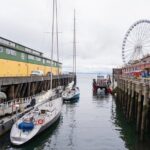
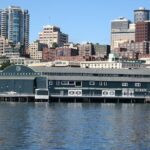
Then you finish at Seattle’s central waterfront, a lively area with sights like piers and major landmarks such as the Great Wheel and Overlook Park (among others). This is a good ending because you’ll already have your bearings when you step off. You’re not ending in some remote dock where you need a whole new plan.
One more practical detail: you’ll be dropped off at a different place than you boarded. Plan that ahead. Some people found the end-point transition surprising, especially if they expected to return to their original marina. If you’re using transit or ride-share, set it up based on the actual end location, not the starting one.
Live Narration Makes the Whole Route Make Sense
The cruise isn’t only about scenery. The onboard experience is powered by live narration, and it’s the narration that turns disconnected landmarks into a coherent picture of Seattle.
A lot of people specifically praise the quality of the guide and the way they handle questions. One guide name that stands out in the details people shared is Kyle, who was described as humorous while keeping the information grounded. That matters because Seattle landmarks can be confusing if you just see them for a second. With commentary, you know what you’re looking at and why it matters.
If you’re traveling with mixed interests—someone who wants history, someone who wants photos, someone who wants just a relaxing boat ride—live narration is the glue. It gives you something to listen to without stopping your viewing.
Comfort on Board: Seating, Restrooms, and What to Bring
Comfort is genuinely part of the value here. The boat has indoor and outdoor seating and includes restrooms onboard. People also note the deck seating options for views, which helps because you can change your spot as the scenery changes.
Here’s my practical packing advice based on what often gets mentioned: bring a jacket or sweater. Even in warmer months, the shift into saltwater can make the deck feel colder than you expect. If it’s sunny, you might want a rain layer too, since Seattle weather can switch.
Also plan for purchasing snacks and beverages aboard if you want them. Food isn’t included. One tip that came up for bar purchases is that the bar may be cashless, so keep that in mind so you’re not scrambling at the counter.
If you want the best views, try to sit toward the front or upper areas when possible. People who arrived early and positioned themselves well described getting excellent sightlines.
Price and Value: Why About $63.28 for Two Hours Can Make Sense
At around $63.28 per person, you’re paying for a tight mix of things that normally cost more if you piece them together: a real locks experience, multiple neighborhoods, skyline photo time, and live guiding.
Two hours is a sweet spot. Long enough to see the locks and transition into the Sound, short enough that it fits into a normal Seattle itinerary without draining your whole day.
This isn’t a “just sail around” cruise. The locking system itself is the kind of experience that would be hard to recreate on your own. Add the floating home views, Gas Works Park pass-by, shipyard and terminal context, and a final skyline finish—and the value stacks up.
The only cost caveat: snacks and drinks are not included. If you’re careful and just buy water or one snack, you’ll keep it reasonable. If you plan to eat onboard, budget for it.
Who Should Book This Cruise (and Who Might Want Another Option)
This tour suits a lot of travelers:
- Families who want something interesting that isn’t a museum-only day.
- Couples who want romance and skyline photos without a long schedule.
- Anyone who likes both city life and water scenery, plus a little engineering spectacle.
It might be less ideal if you hate changing locations. Because it’s one-way with different start and end marinas, you need to plan your ride back. If that kind of logistics stress ruins your trip, pick your transport strategy before you arrive.
If you’re very sensitive to cold wind on the water, treat the jacket advice like a rule. The cruise goes through colder-feeling water sections, and being prepared makes it pleasant instead of annoying.
Should You Book the Seattle Locks Cruise?
Yes—if you want one high-impact Seattle experience that covers both the city skyline and the working water world. The Ballard Locks portion is the headline for a reason, and the live narration helps you actually understand what you’re seeing along the way.
Book it if:
- You like getting photos from the water, especially the Space Needle segment.
- You want a short, guided outing with clear structure.
- You’re traveling with people who have different interests.
Skip or reconsider if:
- You’re not comfortable planning a one-way transfer from a different end point.
- You’d rather spend your time walking around parks and neighborhoods instead of viewing them from the boat.
If you pack a jacket, show up ready to board, and plan your end-point ride, this is the kind of cruise that makes Seattle feel bigger than you expected—in a good way.
FAQ
How long is the Seattle Locks cruise?
It’s about 2 hours.
Is the cruise one-way or round-trip?
It’s one-way. You start at one central Seattle marina and end at a different central Seattle waterfront location. Your ticket shows which direction you’re taking.
What’s included in the ticket price?
The ticket includes the 2-hour sightseeing cruise, live narration, interior and exterior seating areas, and restrooms onboard. Snacks and beverages are not included.
What should I bring for the boat ride?
Bring a jacket or sweater. It can feel colder after you go through the lock and into the saltwater section, even when the day starts warm.
Where can the cruise depart from?
You can depart from either Pier 54 on the Seattle waterfront or AGC Marina on Lake Union. Choose based on the departure option shown in your booking.
Can children ride for free?
Kids ages 3 and under ride free, but they still need a boarding pass.