REVIEW · SEATTLE
Seattle’s Original Guided Harbor Cruise
Book on Viator →Operated by Argosy Cruises · Bookable on Viator
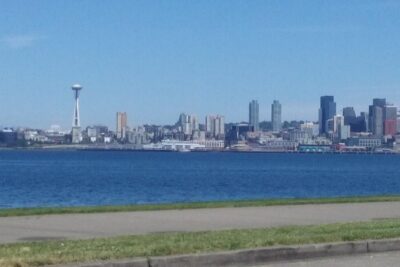
Ships, skylines, and mountains in one hour. This Seattle harbor cruise circles Elliott Bay and Seattle Harbor with live narration that connects the waterfront past to the working port you can see right outside the boat. I like that it is built for first-timers and locals alike, since you get a whole skyline sweep plus real industry details in a short time.
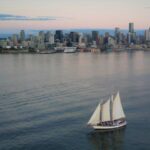
Two things I genuinely enjoy are the photo-friendly skyline views and the way the guide turns big sights into clear context. On recent trips, guides including Casey, Nate, and Angie were singled out for sharing lots of practical, easy-to-follow details without making the cruise feel like homework. And if the weather cooperates, you also get big mountain potential, including Mt. Rainier in the distance.
One thing to consider: views depend on the day. When it is gray, you might not see as much of the mountain line, and the upper deck is open to the elements—dress for wind off the water and you will be happier.
In This Review
- Key highlights worth your time
- The Original Seattle Harbor Cruise: Why This One Still Matters
- Price and value: What you’re really paying for
- Pier 55 check-in: Small timing details that save stress
- Comfort setup: Choosing the right deck for your kind of weather
- The route in plain English: What you see along Elliott Bay
- Central waterfront start: Elliott Bay’s front door
- Pier 57 and the Seattle Great Wheel: skyline with a built-in landmark
- Historic waterfront and Working waterfront: piers that do two jobs
- Myrtle Edwards Park: a small park with serious bay views
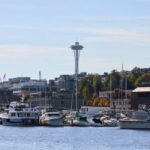
- Space Needle pass: close-up angle plus skyline context
- Terminal 91 and the Alaska connection: the cruise world meets the port world
- Pier 59 and the Seattle Aquarium: water life right on the waterfront
- Elliott Bay inland estuary views: Olympics as the backdrop
- Olympic Mountains: rugged peaks and possible wildlife
- Alki Beach from West Seattle: beach-town Seattle vibes
- Mt. Rainier (weather permitting): the big finish on clear days
- Sports district sightings: T-Mobile Park and Lumen Field
- Port of Seattle container ship action: Harbor Island and the industrial core
- Smith Tower in the skyline: Seattle’s older vertical landmark
- What onboard feels like: A one-hour reset, not a full-day commitment
- Best day to go: How to stack the odds for those mountain views
- Who this cruise suits best (and who might not need it)
- Should you book this Seattle harbor cruise?
- FAQ
- How long is the Seattle Original Guided Harbor Cruise?
- What is the price per person?
- Is there live narration during the cruise?
- Where does the tour start and end?
- Are restrooms available onboard?
- Are snacks and drinks included?
- Is there indoor seating if the weather is bad?
- How early should I arrive to check in?
- Are service animals allowed?
- Do kids pay?
Key highlights worth your time
- Working-port reality: watch massive cargo operations as the boat passes Seattle’s shipping terminal areas
- Space Needle and skyline angles: see the skyline in both panoramic sweeps and closer, more direct views
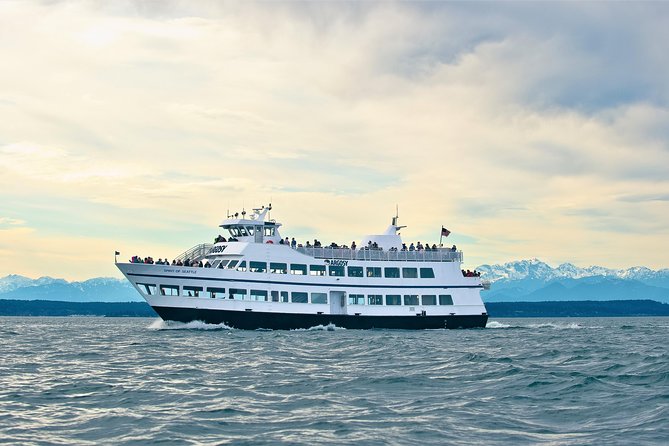
- Indoor plus outdoor seating: lower deck for shelter, upper deck for open-air photos
- A tight 1-hour loop: enough time to cover a lot without tiring out mid-day
- Real waterfront neighborhoods: you pass places like Myrtle Edwards Park and Alki for a feel of both sides of the bay
The Original Seattle Harbor Cruise: Why This One Still Matters
If you only do one boat ride in Seattle, this is the kind that helps you get your bearings fast. You’re not just watching the water. You’re seeing how Seattle’s waterfront actually functions—past and present—while you glide around Elliott Bay and Seattle Harbor with live commentary.
This cruise has been running since 1949, so it has had decades to refine the route and the narration style. For your money, that matters: you’re paying for a guided overview that’s built around the big “you’re here” moments—Space Needle, the Great Wheel, the port, and mountain views—rather than a long trip that drifts.
At about $45.70 per person for an hour, it is priced like a mid-range sightseeing activity. The value is that you get both the skyline and the industrial working waterfront in one ride. Many Seattle activities are either view-heavy or history-heavy. This one tries to balance both, and the short timing keeps it from dragging.
You can also read our reviews of more boat tours in Seattle
Price and value: What you’re really paying for
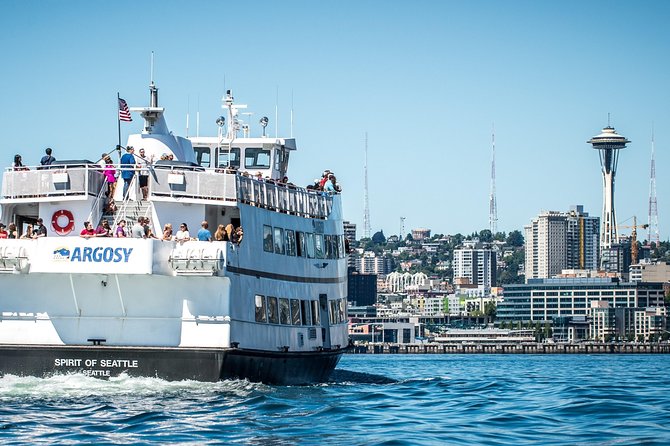
You can find cheaper things to do in Seattle, sure. But harbor cruises charge because you’re paying for a vessel, staff, and a route that gives you angles you cannot recreate easily from land.
Here, your included perks are meaningful: live narration, onboard restrooms, and both interior and exterior seating areas. You also have the option to buy food and drinks onboard. That means you can treat it like a calm half-lunch or just a quick, relaxing reset during busy sightseeing days.
One practical point: since this is a popular “classic,” booking ahead helps. The tour is typically booked about 11 days in advance, so if you want a specific departure time, earlier is better.
Pier 55 check-in: Small timing details that save stress
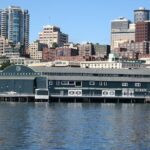
Your meeting point is Pier 55, 1101 Alaskan Way, Seattle. Plan to arrive early because you need to check in 30 minutes before departure, and the boarding gate closes 5 minutes prior.
This is one of those tours where arriving late can cost you the trip, even if you are close. If you’re combining this with other central waterfront plans, give yourself a buffer. Seattle traffic and pier-side walking can slow you down more than you expect.
Also note: you’ll have mobile tickets and confirmation at booking, so you are not waiting around for a printed voucher.
Comfort setup: Choosing the right deck for your kind of weather
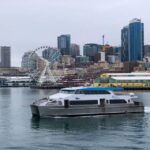
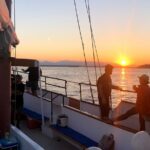
The vessel typically includes an enclosed lower deck and an open upper sun deck. If you want the most comfortable ride in wind or drizzle, aim for the lower deck. If you want max photo angles and direct sightlines over the rail, the upper deck is where the action is—just bring a layer.
The cruise is built for a wide range of travelers, and most people can participate. There’s also indoor and outdoor seating on all vessels, plus restrooms onboard, which is genuinely helpful for a 1-hour format.
What about noise? In real life, a boat has talking and wind. One review called out that a loud group nearby can make narration harder to hear. If you hate competition for attention, choose a seat that faces forward and give yourself a few minutes to settle before the big landmarks hit.
The route in plain English: What you see along Elliott Bay
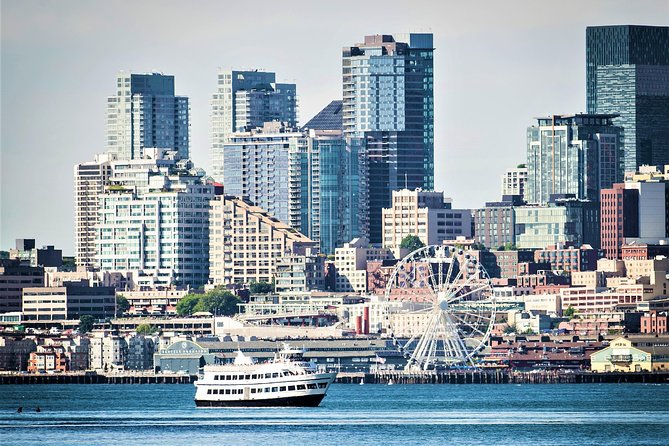
This cruise is narrated and paced so you notice major landmarks as you pass them. Even though it is “one loop,” the scenery comes in sections—city icons, green shoreline, sports/entertainment districts, and then the industrial port world. Here’s how the route translates into what you’ll actually experience.
You can also read our reviews of more guided tours in Seattle



Central waterfront start: Elliott Bay’s front door
You begin at Seattle’s historic central waterfront, cruising by piers and landmarks as the guide sets the scene. This is where you learn the basic pattern of the waterfront: what used to matter most, and what matters now.
Why this part matters: it helps you recognize what you’re looking at later. Once you understand how the piers and waterways are organized, the rest of the cruise feels less like random scenery and more like a guided walkthrough.
Pier 57 and the Seattle Great Wheel: skyline with a built-in landmark
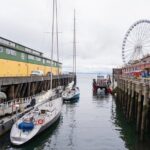
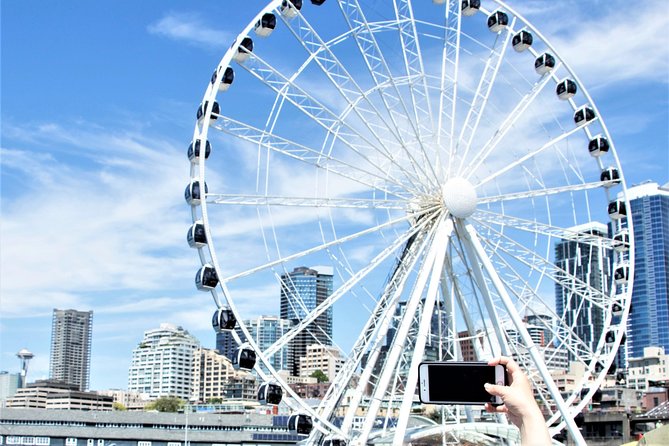
As you cruise by Pier 57, you’ll see the Seattle Great Wheel in full view. It opened in 2012, and it doubles as both a fun ride and a high-visibility viewing spot.
From the boat, the Great Wheel gives you a bright, easy-to-frame “Seattle identity” element—especially when you’re capturing skyline shots.
Historic waterfront and Working waterfront: piers that do two jobs
As the cruise continues, you pass the historic waterfront while the guide explains how each pier functions in the present. This is one of the points that makes the cruise feel more grounded than typical sightseeing.
A drawback here, if you can call it that: you won’t stop or get out. So this is best if you like learning while moving and you are happy to take photos from the deck.
Myrtle Edwards Park: a small park with serious bay views
You’ll go by Myrtle Edwards Park, near the path that runs about 1.25 miles along Elliott Bay. It connects downtown to Magnolia and gives you a calmer visual stretch—water, city edges, and a sense of how Seattle squeezes green space into a busy harbor.
Space Needle pass: close-up angle plus skyline context
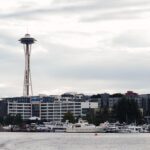
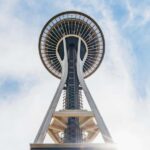
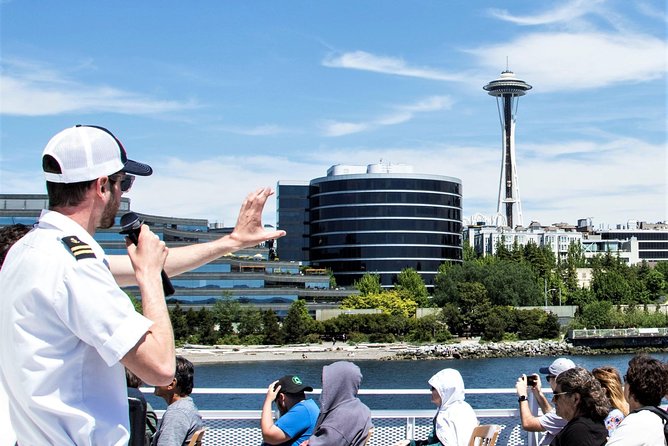
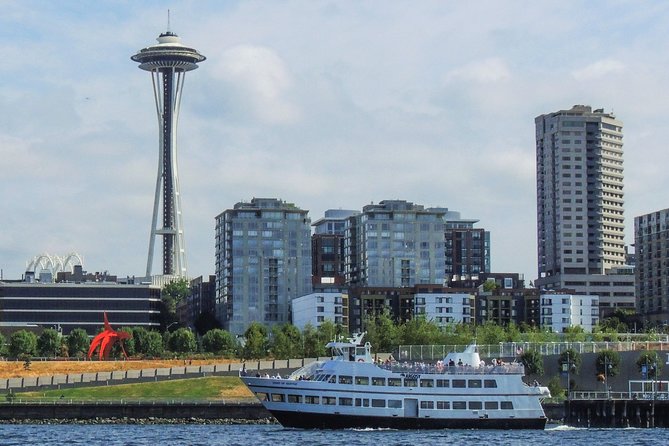
The Harbor Cruise makes sure to go by the Space Needle, and you get both close and panoramic views. The route is timed so you can capture the Needle on its own and also as part of the larger skyline.
On clear days, this is often the moment people remember most. The boat makes it feel immediate, like the city is turning toward you instead of being far away across the waterfront.
Terminal 91 and the Alaska connection: the cruise world meets the port world
You’ll also pass Terminal 91, one of Seattle’s main cruise terminals. When cruise ships are in port, you can see their scale up close, and the guide talks about Seattle’s longstanding ties to Alaska’s Inside Passage.
This is a good segment even if you are not a cruise person. The big takeaway is how Seattle operates as a hub for both visitors and cargo. The contrast makes the narration more interesting.
Pier 59 and the Seattle Aquarium: water life right on the waterfront
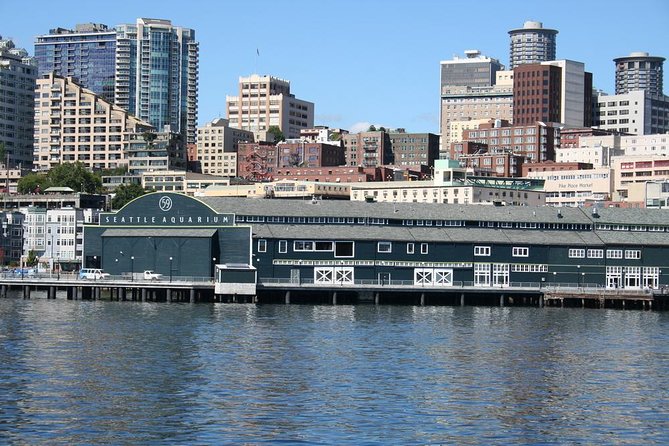
As you pass Pier 59, you’ll see the Seattle Aquarium. It opened in 1977, and the Ocean Pavilion expansion is listed as newly built in 2024.
Even though you’re not going inside on this cruise, it’s useful to see where the attraction sits on the waterfront map. It helps you decide later whether you want to build in aquarium time on a separate visit.
Elliott Bay inland estuary views: Olympics as the backdrop
As the cruise moves around the wider waters between the Olympic Peninsula and Seattle, you’ll get sweeping estuary views. It’s about 95 miles long, and on a clear day the Olympic mountain ranges show up across the water.
If you are planning a photo day, this is where you’ll want to glance up and then glance back to the waterline. The framing changes quickly on a boat, and the mountains create instant depth.
Olympic Mountains: rugged peaks and possible wildlife
The Olympic Mountain Range sits across the water from Seattle, and a clear day can mean snow-capped peaks. The guide also suggests that wildlife may appear if you are lucky.
Real talk: you cannot count on wildlife, and that is fine. The value here is the geography lesson—Seattle’s skyline is dramatic, but the harbor is also your window into a bigger natural region.
Alki Beach from West Seattle: beach-town Seattle vibes
In the West Seattle area, you’ll pass Alki Beach, one of Seattle’s more popular stretches. It’s known for beach volleyball and was featured in the movie Sleepless in Seattle, and from the boat you get a long view along the shoreline.
This section slows the vibe a little, shifting from dense downtown structures to a more beach-town feel. Even if you end up visiting Alki later, the cruise gives you a sense of where everything sits.
Mt. Rainier (weather permitting): the big finish on clear days
One of the most exciting “maybe” moments is Mt. Rainier. The info points to the volcano at 14,410 feet, about 60 miles southeast of Seattle, and it is weather dependent.
When it’s visible, the contrast is hard to beat: industry and city blocks in the foreground, then a towering mountain line in the background. When it’s not visible, you still get the geography lesson without the postcard payoff.
Sports district sightings: T-Mobile Park and Lumen Field
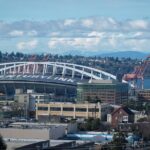
The cruise also passes the area near T-Mobile Park (home of the Seattle Mariners) and Lumen Field (home of the Seattle Seahawks and Seattle Sounders). The stadiums sit close together, which makes it easy to notice both from the water.
If you happen to travel during overlapping seasons, you could even plan to catch a Sounders match and a Mariners game in one weekend. Rainy-day mention matters here too: the Mariners field has a retractable roof, so the guide notes that it may close on wet days.
Port of Seattle container ship action: Harbor Island and the industrial core
This is the part that surprises people who expect a purely scenic cruise. You’ll get up close views of large container ships as they load and unload into the Port of Seattle area, including Harbor Island.
Harbor Island is described as the largest man-made island in the United States and built in 1909, and it is used for commercial and industrial activity. From the boat, you can actually see the scale of how Seattle moves goods. It turns the cruise from skyline sightseeing into “oh, this is a real city economy” sightseeing.
Smith Tower in the skyline: Seattle’s older vertical landmark
Finally, you’ll see Smith Tower, Seattle’s original skyscraper. It’s 35 floors high, and the info notes an open-air observatory at the top.
On a harbor cruise, older landmarks like this can be the little anchor points that help you map the city faster. You notice shapes you later recognize from downtown streets.
What onboard feels like: A one-hour reset, not a full-day commitment
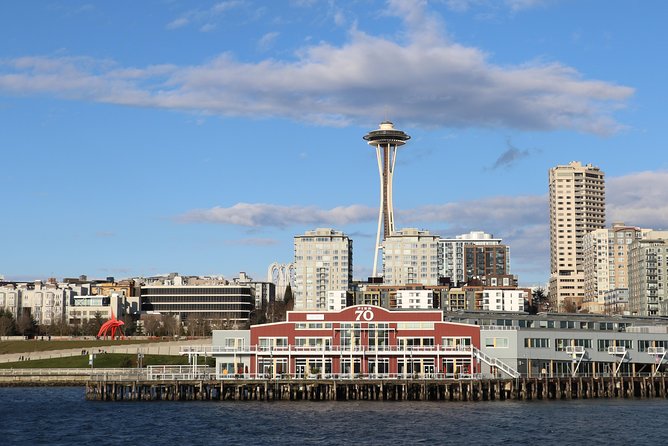
This is an approximate 1-hour cruise. That short length is part of the attraction. It gives you a strong Seattle overview without stealing half your day.
Onboard, you can stay warm on the enclosed deck and still step out on the open upper deck when you spot a view you want. Restrooms are available, which makes a short cruise feel easier to manage than longer sailing tours.
Food and beverages are available for purchase, so you can bring a light appetite if you want to turn the ride into a break rather than just a photo stop. If you plan to buy drinks, you will likely find the bar or bar-level seating convenient, based on one piece of practical advice shared in reviews.
Best day to go: How to stack the odds for those mountain views
This cruise requires good weather. If Seattle’s sky is clear, your chances for big scenery go way up, especially for mountain visibility.
Practical tip: if you have flexibility, schedule this early in your trip. On the day it runs, your first view of the skyline helps you plan what to do next. If the weather is poor and the mountains are hidden, you still get the city and port experience. But if Rainier visibility is on your wish list, give yourself more chances by not booking as your last activity.
Who this cruise suits best (and who might not need it)
This is a great choice if you:
- Want a one-hour Seattle overview that covers skyline, neighborhoods, and the working port
- Like guided narration and want context without reading a guidebook
- Are traveling with a mix of ages and interests, since the variety helps everyone
- Prefer photos from water-level rather than standing in traffic-adjacent crowds on land
It may be less ideal if you:
- Only want a fully scenic cruise and dislike seeing industry
- Need total quiet to enjoy narration (boats can be social spaces)
- Want to spend time exploring multiple stops on foot, since this is a pass-by route
Should you book this Seattle harbor cruise?
If you want the simplest path to understanding Seattle, I think it’s worth booking. You get live narration, restrooms, indoor and outdoor decks, and a route that hits both iconic city sights and the working port machinery. The price is fair for the range of what you see in one hour.
Book it if you can dress for wind and stay flexible on mountain visibility. If your schedule is tight, this cruise is a smart use of time—because it shows you the shape of the city and the function of the waterfront in one smooth, narrated loop.
FAQ
How long is the Seattle Original Guided Harbor Cruise?
The cruise runs for about 1 hour.
What is the price per person?
The price listed is $45.70 per person.
Is there live narration during the cruise?
Yes. The tour includes live narration in English.
Where does the tour start and end?
It starts at Pier 55 (1101 Alaskan Way, Seattle, WA 98101) and ends back at the same meeting point.
Are restrooms available onboard?
Yes, bathrooms are available on board.
Are snacks and drinks included?
No. Snacks and beverages are available for purchase onboard.
Is there indoor seating if the weather is bad?
Yes. The vessels offer both indoor and outdoor seating, with a typical enclosed lower deck and open upper sun deck.
How early should I arrive to check in?
Check in is required 30 minutes prior to the tour, and the boarding gate closes 5 minutes before departure.
Are service animals allowed?
Yes, service animals are allowed.
Do kids pay?
Kids age 3 and under ride free but do require a boarding pass.