REVIEW · SEATTLE
From Seattle: Round Trip by High Speed Ferry to Victoria, BC
Book on Viator →Operated by FRS Clipper · Bookable on Viator
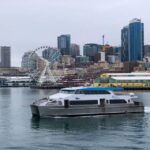
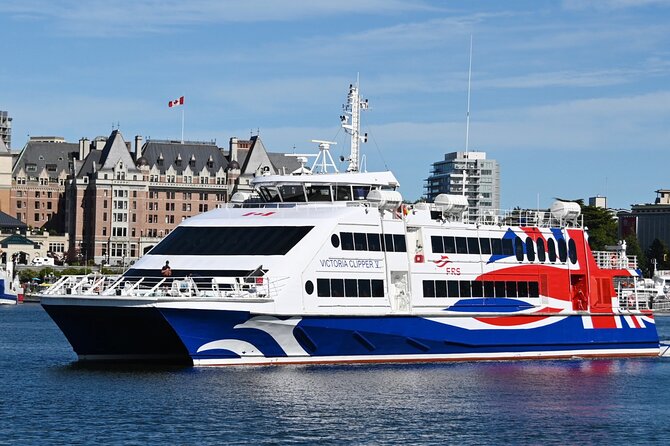
A faster way to reach Victoria. The Seattle to Victoria round trip by high-speed ferry is a smart swap for a long drive, and the route itself is part of the fun as you cruise through Puget Sound and toward the Strait of Juan de Fuca. You land right at Victoria’s Inner Harbour, so you can start exploring the minute you step off the boat.
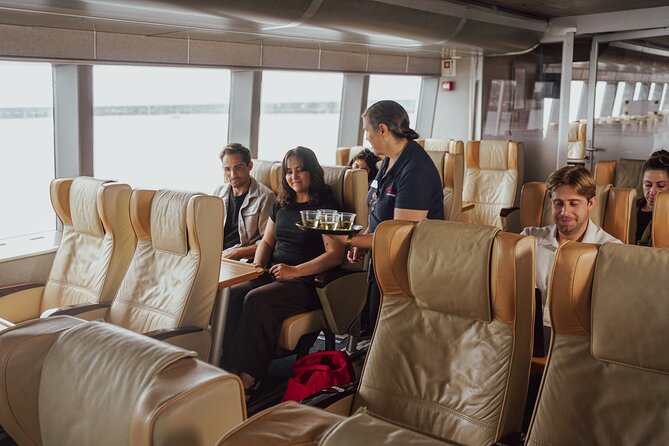
I like how simple and time-saving this feels once you’re on board: you’re going door-to-downtown by ferry, not stuck behind traffic. I also really appreciate the onboard comfort—wide economy seats with lots of legroom, plus tables on some seats for eating your purchased snack box at your spot. A likely drawback: the schedule can run longer than the headline timing, so a day trip can feel tighter once you add real-world travel and disembarking.
In This Review
- Key points to know before you buy
- Pier 69 Check-In: Documents and timing that actually matter
- Onboard Comfort: Economy seats, tables, cafe, and duty-free
- The Seattle-to-Victoria cruise: what you’re doing with the time
- Victoria Inner Harbour arrival: the easiest way to start your day
- Time planning: why 3 hours can feel like 4
- On-board atmosphere: comfort is great, but families can change the vibe
- Value for $192: what you’re really paying for
- Who should book this ferry from Seattle?
- Should you book this Seattle to Victoria round trip ferry?
- FAQ
- How long does the ferry take from Seattle to Victoria?
- Where do I board the ferry in Seattle?
- What ID do I need to cross into Canada?
- Is food included on the ferry?
- How much luggage can I bring?
- Can I bring a car or bring pets/bikes?
- What happens if it’s canceled due to weather?
Key points to know before you buy
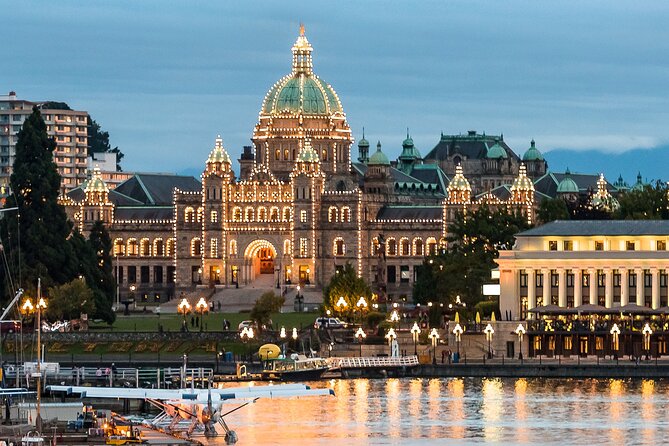
- Downtown-to-downtown convenience: depart from Seattle’s central pier and arrive at Victoria’s Inner Harbour right in town.
- Comfort-first economy seating: roomy seats with ample legroom, and some seats have tables.
- Onboard extras without surprises: a cafe and duty-free shopping are there, but food and drinks cost extra.
- Weather matters: this runs best when conditions are right, and deck time can be limited when it’s choppy.
- Border day checklist is non-negotiable: you’ll need the right ID to enter Canada at embarkation.
- Plan for timing wiggle: while it’s often around 3 hours on the schedule, some trips run closer to 4.
Pier 69 Check-In: Documents and timing that actually matter
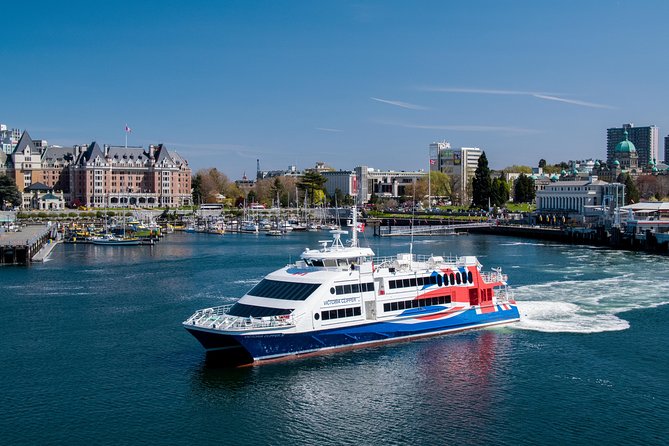
This ferry starts at 2701 Alaskan Way, Pier 69 in downtown Seattle. Aim to arrive about one hour before departure, not 10 minutes before, because you’ll need time for ticket pickup/check-in and border verification steps.
You’ll need one of the accepted IDs to cross into Canada by land and sea: a US passport, passport card, Enhanced Driver License, or an Enhanced ID card (EDL/ID). If you’re also planning to fly later, keep in mind the standard message here: a passport is required for air travel, and passport card or EDL/ID are not valid for air travel.
Also read the fine print on citizenship details at booking. Your booking cannot be confirmed without accurate passenger info like full names and dates of birth, and the operator requires you to advise your citizenship in the special requirements area.
One more practical note: this is a passenger-only ferry, so there’s no bringing a car. If you’re hoping to bring a bike or dog, you’ll need to flag it at booking because there are restrictions.
You can also read our reviews of more tours and experiences in Seattle.



Onboard Comfort: Economy seats, tables, cafe, and duty-free
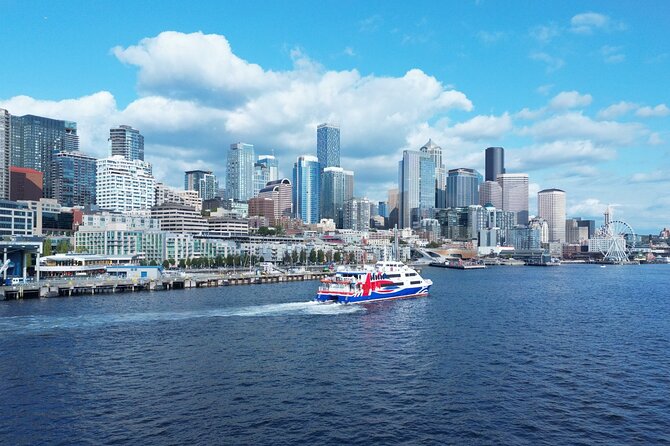
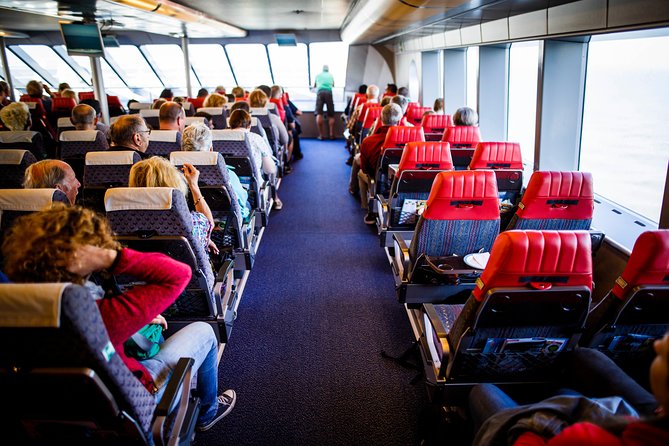
Once aboard, the main vibe is calm and comfortable. The ferry uses economy seating that’s designed for a relaxing ride, with wide seats and good legroom. Some seats include tables, which sounds minor until you’re trying to eat a meal basket or sip coffee without balancing everything on your knees.
You should treat onboard food as optional extra. A cafe is available, and duty-free shopping is part of the onboard mix, but meals and beverages are not included in the price. That said, many people find it a convenient setup for keeping hunger under control without hunting down food immediately after arrival.
Pack a light layer. At least one recent sailing notes the temperature can run cold, especially if you spend time sitting near airflow or on the deck.
Duty-free shopping is a real time filler on a short trip. If you want souvenirs, candy, or small luxuries, this is the easiest moment to grab them. If shopping isn’t your thing, you can still spend the time in the seats, on the deck, or just people-watch from a comfortable angle.
The Seattle-to-Victoria cruise: what you’re doing with the time
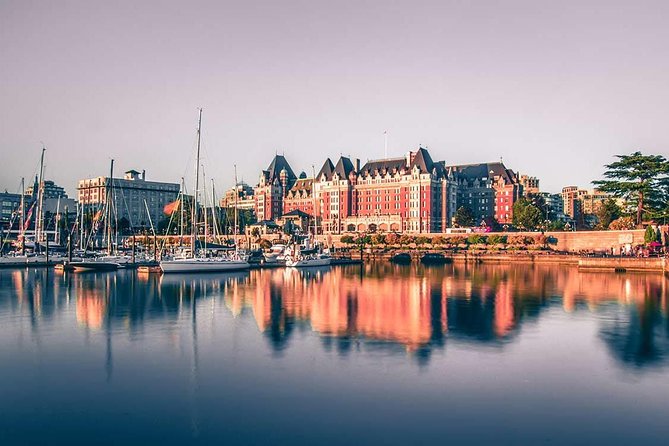
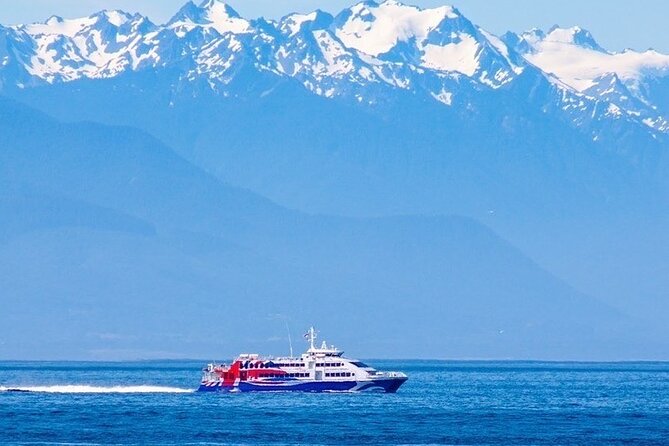
The sailing is fast, but it’s not just about speed. The ferry route goes through Puget Sound and then into the Strait of Juan de Fuca on the way to Victoria. That means you’re getting a coastal, ocean-style view for much of the ride—particularly if you can step out to the deck when conditions allow.
If weather turns rough, don’t panic. A few reviews mention deck time being harder when conditions aren’t ideal. When it’s windy or choppy, you may still enjoy the views from inside.
This is also where the crew quality shows. People repeatedly call out friendly service and smooth operations, and you’ll likely get quick answers to common questions from staff. Some names came up in feedback, including Hank, plus others like Deb, Ashley, and Jessinine being singled out for helpful, personable service.
Victoria Inner Harbour arrival: the easiest way to start your day
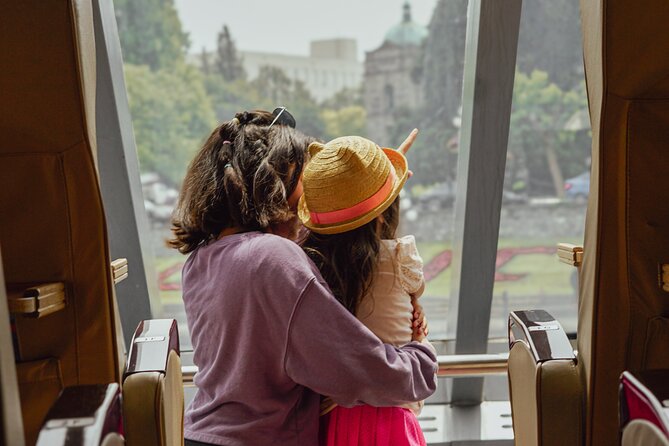
You dock at Victoria’s Inner Harbour, which is the key reason this ferry works for day-trippers. You don’t arrive in a remote zone and then fight your way into town. You step off close to where most people want to be first: the harbor area, walkable streets, and the center of activity.
For a day trip, that location gives you flexibility. You can pick a simple plan like wandering, window-shopping, and grabbing lunch without overthinking transport. If you’re the type who likes to keep it loose—follow the weather, choose what looks fun—you’ll probably enjoy this format.
That said, timing is everything. If your ferry leaves Seattle later than you expected, or if the crossing runs long, your “discover Victoria’s Inner Harbour” time shrinks fast. I’d plan your day as if you’ll have less time than the postcard version, and you’ll feel pleasantly ahead instead of rushed.
Time planning: why 3 hours can feel like 4
The experience is listed as about 3 hours for the trip, but real-world timing can vary. One of the most important themes in feedback is that the crossing can stretch—on at least one sailing, it was closer to 4 hours each way. That’s a big deal for a day trip.
Here’s how I think about it: the ferry itself may be fast, but a day trip also includes boarding time, disembarking time, border processing, and the walk to your first stop. If you’re trying to pack in a big-ticket activity with a strict start time, you’ll want a buffer.
Also note the flow during disembarking. Some feedback describes waiting during return trips while certain passengers get extra time to leave the boat first. That’s not something you can control, but it’s useful to know so you don’t assume the last person out will happen instantly.
A practical strategy: if you want the day trip to feel relaxed, schedule your main activity in Victoria for later in the day, or consider doing a shorter checklist rather than a full itinerary sprint.


On-board atmosphere: comfort is great, but families can change the vibe
The ferry is set up for comfort, but it’s still a public ride, and the onboard mix matters. A couple reviews describe lots of children moving around and noise building during the crossing. If you’re traveling with noise sensitivity—maybe you’re working, reading, or trying to rest—go in with eyes open.
On the flip side, the staff response can make a difference. Some passengers are happy with how crew handled things; others felt it didn’t go far enough during chaotic moments. If you want to reduce the chances of being in the middle of family energy, you can choose your seat with a calmer location in mind when you book or request seating.
And if you’re traveling as a mobility-focused group, pay attention to feedback about assistance. One review specifically thanks Hank for helping a traveler with mobility issues, which suggests the crew can be attentive when needed.
Value for $192: what you’re really paying for
At $192 per person round trip, this ferry isn’t cheap compared to a basic bus deal. The value comes from what you avoid: the long drive time, fatigue, and hassle of arriving in a busy area with parking and traffic.
If you compare it to self-driving, you’re paying to remove the stress and concentrate your time in Victoria instead of behind the wheel. That can be worth it, especially when your trip is short.
What you should budget for separately:
- Food and drinks: available for purchase onboard; not included.
- Checked luggage: $20 per piece each way.
- Seat upgrades: Comfort and Vista class seating exists, but pricing depends on availability and you need to call for details.
One useful anecdote: a review notes a $20 upgrade to Vista upstairs seating on a sailing. Treat that as a heads-up that upgrades can sometimes be affordable, but don’t assume it will be available or priced the same way every time.
Also consider the luggage limit. You get carry-on included (one small carry on), and the moment you add checked bags the costs add up quickly. If you travel light, this is easier on your wallet.
Who should book this ferry from Seattle?
This is a strong fit if you want:
- A straightforward, downtown-to-downtown way to reach Victoria.
- A comfortable ride without changing plans or hunting for local transit immediately after arrival.
- A day trip pace that includes sightseeing around the Inner Harbour area.
It’s also a good option for solo travelers and friends who want an easy reset outside Seattle without committing to a longer itinerary. Several reviews describe smooth, organized experiences, and people appreciate that getting through customs can feel manageable when the process is handled well.
You might want a different plan if:
- You’re trying to squeeze in a tightly scheduled day with zero buffer.
- You’re very sensitive to noise, since families can be part of the onboard mix.
- Your trip needs strict, timed activities like a morning reservation that can’t move if the crossing runs late.
If time allows, consider staying overnight in Victoria. Even though this review is about the ferry ride, the logic is simple: the crossing is only part of the day, and the longer you stay, the less you feel “rushed through” the experience.
Should you book this Seattle to Victoria round trip ferry?
I’d book it if you value convenience, comfort, and a simple day-start in the center of town. For many people, the ferry hits that sweet spot: you trade driving stress for a relaxing ride, then step off at Victoria’s Inner Harbour ready to wander.
But I’d also book it with two adjustments in your head. First, assume your day trip may feel closer to a long outing than a quick hop, because crossings can run longer than the headline timing. Second, keep food costs and possible upgrades in mind so the final bill doesn’t surprise you.
If you want a stress-light way to reach Victoria without complicated logistics, this is a solid choice.
FAQ
How long does the ferry take from Seattle to Victoria?
The trip is listed at about 3 hours (approx.). Some sailings may run longer in practice, so it helps to plan with a buffer.
Where do I board the ferry in Seattle?
You meet at 2701 Alaskan Way, Seattle, WA 98121 (Pier 69 area).
What ID do I need to cross into Canada?
You need a US passport, passport card, Enhanced Driver License, or Enhanced ID card (EDL/ID) to cross by land and sea. You’ll need a passport for air travel.
Is food included on the ferry?
No. There’s a cafe onboard and you can buy meals and beverages, but food and drink are not included in the price.
How much luggage can I bring?
You’re allowed 1 small carry-on included. Checked luggage costs $20 per piece each way.
Can I bring a car or bring pets/bikes?
This is a passenger-only ferry, so autos are not allowed. Bikes and dogs have restrictions, and you must advise the provider at booking if you need to bring one.
What happens if it’s canceled due to weather?
The experience requires good weather. If it’s canceled due to poor weather, you’ll be offered a different date or a full refund.