REVIEW · SEATTLE
Mt. Rainier highlights – old forest, falls and glaciers
Book on Viator →Bookable on Viator
One day can feel like four seasons. This Mount Rainier highlights tour pairs a short climb in the Paradise area with big payoffs: glacier views, waterfalls, old-growth forest, and the classic Reflection Lake photo moment. I like that it keeps things moving but not rushed, with a guide who helps you hit the best viewpoints while still giving you time to breathe. One thing to plan for: the Paradise hike is short on paper but can be steep, and the drive takes a chunk out of your day.
You’re not just riding. You get the gear for the season—trekking poles and (in November–June) snowshoes and crampons—so you can focus on the scenery instead of figuring out how to stay safe on icy ground. I also like the small-group feel (up to 14 people), which makes it easier to slow down for photos, restroom stops, and questions. A possible drawback is that this is a long day with two drives from Seattle, so if you’re prone to motion sickness or you hate being in a vehicle for hours, it might feel like a slog.
Finally, it’s worth knowing this isn’t a casual stroll. You’re hiking about a mile one way from the Paradise Visitor Center (and then back), plus a few shorter walks to the waterfalls and forest stops. If you have knee or hip issues, this tour isn’t recommended, and you’ll want to take the guide’s pace seriously.
In This Review
- Mt. Rainier Highlights From Paradise: Glacier Picnic First, Then Waterfalls
- Reflection Lake and the Cascades Views: Why This Stops Matter
- Narada Falls and Christine Falls: Two Waterfalls, Two Different Feels
- Paradise Visitor Center to Old-Growth at Longmire
- Hike vs. Snowshoe (Nov–Jun): The Season-Smart Part
- How the Pace Really Works: Photo Stops, Restrooms, and Small Group Time
- What You Need to Bring (And What You Don’t)
- Value for $179: What You’re Paying For
- Who This Tour Suits Best (And Who Should Skip It)
- Practical Details That Make the Day Easier
- Should You Book This Mt. Rainier Highlights Tour?
- FAQ
- Where is the meeting point in Seattle?
- How long is the Mt. Rainier highlights tour?
- What does the tour cost?
- Is lunch included?
- Will I snowshoe or hike in the winter?
- What gear is included?
- How much hiking will I do at Paradise?
- What sights are included besides Paradise?
- What happens if weather is poor?
Mt. Rainier Highlights From Paradise: Glacier Picnic First, Then Waterfalls
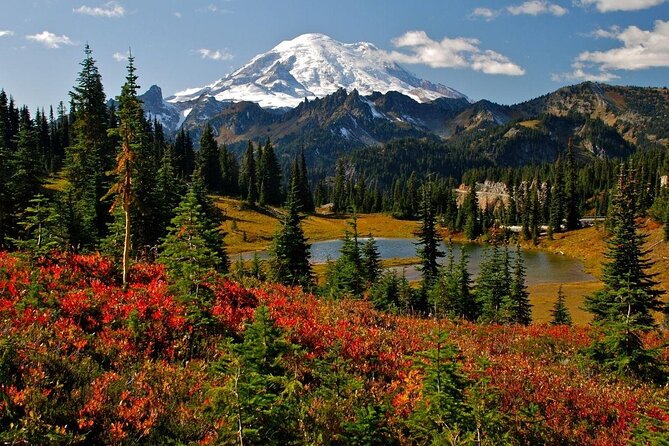
This tour is built around one brilliant idea: start at Paradise (around 5,500 feet), get you close to the glaciers fast, and let you enjoy them without a huge technical climb. You’ll drive in from Seattle—about two hours each way—and then begin at the Paradise Visitor Center.
The star moment is a hike from the Visitor Center to a picnic spot near giant glaciers, roughly one mile each direction. On a map, it’s “easy distance.” On the trail, it’s another story: several people noted the uphill nature, so expect a steady gradient rather than flat walking. The good news is that the route is short enough that you’re not committing to a full-day grind. You picnic on the way, then hike back. It’s simple, but it sets the tone for the entire day.
After the glacier picnic, the tour continues with scenic pull-offs and short walks tied to the park’s signature views:
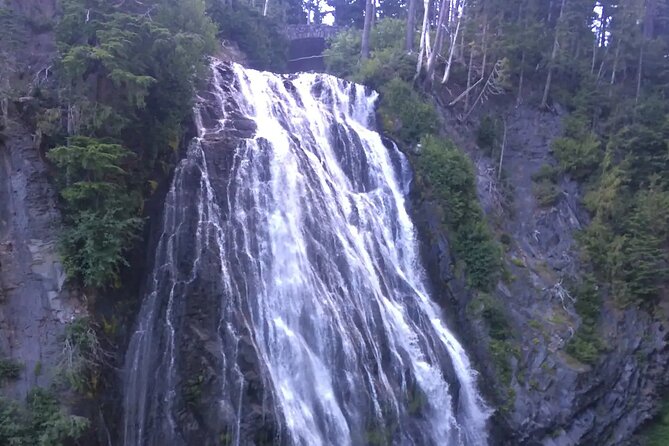
- Narada Falls (a 168-foot fall) with a walk to the base
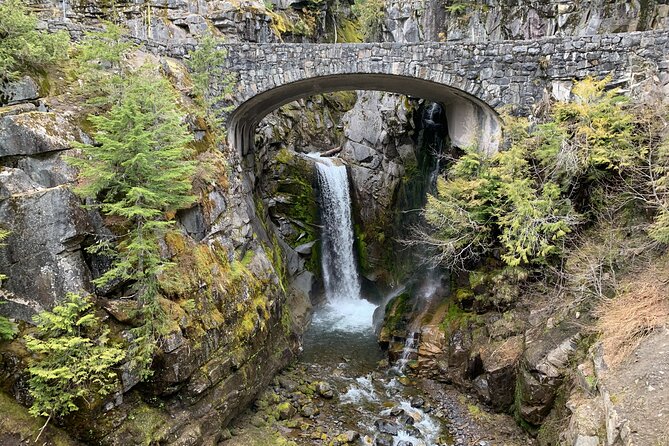
- Christine Falls from the viewpoint by the old stone bridge
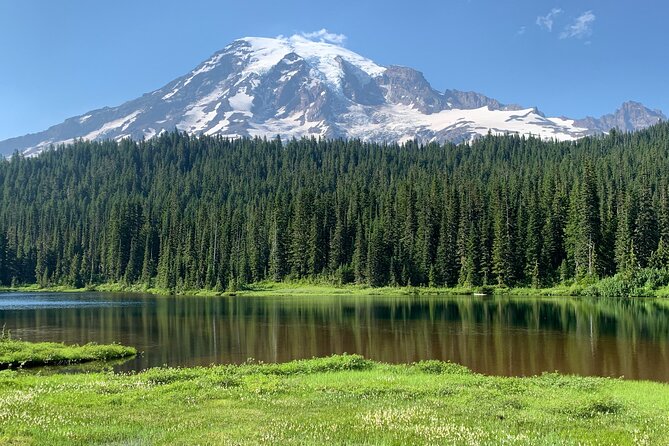
- Reflection Lakes for the famous mirror-like scenery in summer (and a frozen, different mood in winter)
If you’re a first-timer to Mt. Rainier, this sequence works. You see the glacier scale first, then you get the waterfalls, then you round it out with the reflective lake views and old-growth forest texture.
Reflection Lake and the Cascades Views: Why This Stops Matter
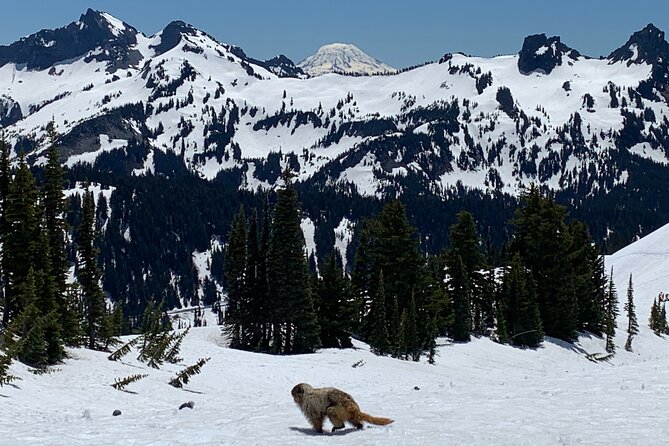
Reflection Lake is one of those places you remember because it looks like it was designed for photos. In summer, Mt. Rainier often appears reflected in the water. In winter, the lake freezes and the road to the area is closed, so your timing matters.
Even if the reflection isn’t perfect in the conditions you get, I like this stop because it teaches you how the park changes with the season. You’re not only chasing the iconic shot. You’re also learning what “Rainier scenery” means across weather and light.
The itinerary also includes panoramic viewpoints along the drive back and between stops. That matters because you’re riding through different bands of elevation. The Cascades around the park can show up in the background, and you’ll usually get multiple looks rather than one single “big reveal.”
You can also read our reviews of more tours and experiences in Seattle.

Narada Falls and Christine Falls: Two Waterfalls, Two Different Feels
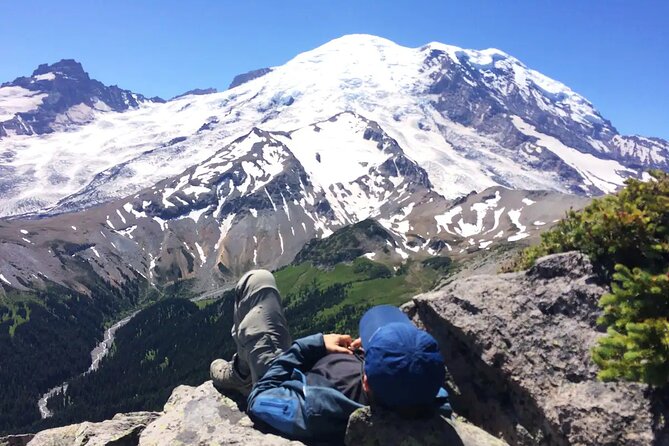
This tour doesn’t treat waterfalls as one-and-done. You get two distinct experiences near Paradise.
Narada Falls is a solid destination: you’ll hike to the bottom of a 168-foot fall. It’s a focused walk, and once you’re there, the payoff is immediate—water sound, spray, and that strong vertical drop that makes Rainier feel alive.
Christine Falls is more of a viewpoint experience. You see it near the old stone bridge. This can be a nice break when you want less walking but still want the park’s drama. It also keeps the day varied, so you’re not doing only steep uphill trail time.
A practical note: waterfalls also mean damp air. Even in warmer months, it can feel cooler near them, and you’ll want layers you can pull on and off.
Paradise Visitor Center to Old-Growth at Longmire
After the higher-elevation highlights, you’ll drop toward Longmire, where you can stretch your legs in lower elevation old-growth forest. This part of the day is about texture and atmosphere: older trees, a calmer pace, and walking that feels different from the glacier-area incline.
Longmire is also a good contrast to the more dramatic, higher-altitude sights. Instead of chasing views for the skyline, you’re in the forest’s slower rhythm. Several people loved that mix—scenery with a side of forest walking—because it keeps the day from feeling like a photo checklist.
Hike vs. Snowshoe (Nov–Jun): The Season-Smart Part
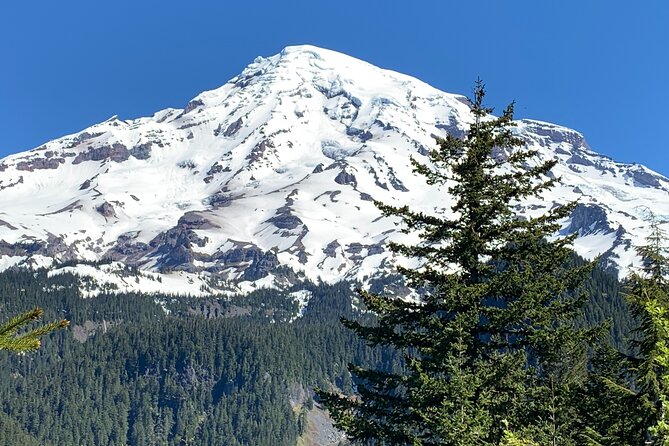
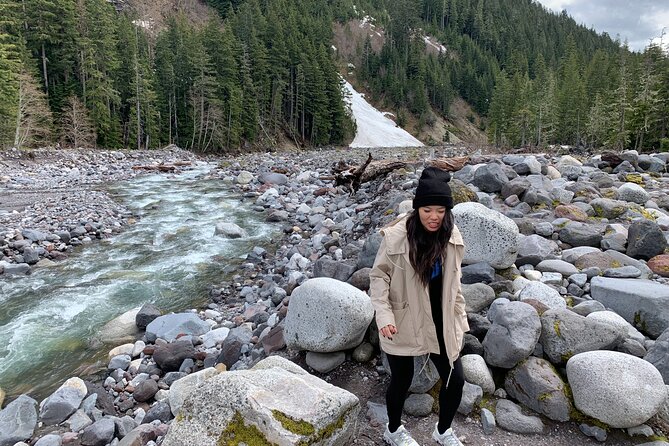
One of the best features here is that the tour changes how it gets you outdoors depending on the season. In November through June, you snowshoe instead of hiking, and you don’t need prior experience. The point is to keep you moving safely and comfortably in winter conditions.
You also get winter traction support: snowshoes and crampons are provided, along with trekking poles. That’s a big deal because winter footing at Rainier can be unpredictable, even when the forecast looks fine down in Seattle. People noted that the guide came prepared with crampons for those who didn’t have the right footwear, which is exactly what you want on a cold day.
If you’re going in shoulder season, plan for weather shifts. It can be sunnier lower down and totally different at Paradise. Dress in layers and keep your expectations flexible.
How the Pace Really Works: Photo Stops, Restrooms, and Small Group Time
This tour is designed as a relaxed small-group day, with a maximum of 14 travelers. That group size matters because you can actually have a conversation with your guide and still get practical help on timing, trail pacing, and what to watch for.
Stops are structured to give you time to move and to reset:
- You’ll have a main glacier hike plus shorter walks to waterfalls and viewpoints.
- You’ll have restroom breaks built into the day, including a stop where you can pick up picnic items.
- You’ll have time at scenic pull-offs so you’re not sprinting between “must-see” points.
Guide quality is a repeated theme in the experience. Names that came up include Susan Hill (often referenced as Susan or Sue), plus Rachel, John, Nate, and Matt. Across those accounts, what stands out is patience on steeper segments and helpful pacing so the group stays together.
One caution: the schedule is long, and the driving portion is real. If you get restless in vehicles, bring something to pass the time. You’re looking at roughly 10 to 11 hours total.

What You Need to Bring (And What You Don’t)
The tour includes several high-value basics: bottled water, an air-conditioned vehicle, trekking poles, and season gear like snowshoes and crampons. You also won’t be scrambling for admission fees because all fees and taxes are included.
What you do need to plan yourself:
- Lunch isn’t provided. You can bring your own picnic, and there’s also a chance to buy picnic items/snacks during a stop with restroom access.
- There’s a cafeteria at the Visitor Center if you want to grab something once you arrive.
- You’ll want appropriate footwear. Reviews specifically called out that hiking boots make a difference, especially on steeper or icy trail segments.
Since the itinerary includes both uphill walking (Paradise) and shorter walks (falls and forest), pack a layer system:
- quick-dry base layer
- insulating mid layer
- windproof outer layer
- gloves if you’re sensitive to cold
Even in summer, the higher elevation can change how you feel fast.
Value for $179: What You’re Paying For
At $179 per person, this isn’t a bargain bus trip. The value comes from the parts that reduce hassle and risk:
- Transport from Seattle downtown (with a meeting point at 415 Pine St)
- Guided hikes and viewpoint stops across a lot of the park highlights
- Park-related fees and taxes handled in the cost
- Gear included for the season: poles, snowshoes, crampons
- A small group size that supports better pacing and less waiting
You’ll also like that the tour is flexible by season. In winter/spring, you’re not stuck with the “you can’t hike, good luck” problem. You snowshoe, no experience needed, and the gear is there.
The main “cost” you pay is time and effort: it’s a full day, and the Paradise hike can feel more intense than you expect because it’s mostly uphill. That’s not a flaw—just something to match to your fitness level.
Who This Tour Suits Best (And Who Should Skip It)
This is a great fit if you:
- want a guided highlights route without renting a car
- like hiking but don’t want a long, technical trek
- care about the glacier-and-waterfall combo
- prefer a small group day with time at viewpoints
- are okay with a moderate fitness requirement and short-but-steep trail sections
It’s not a great fit if you have knee or hip problems. Multiple parts of the day involve uphill walking and uneven ground, and even short distances can be demanding at higher elevation.
Practical Details That Make the Day Easier
A few logistics notes that can save you stress:
- Pick-up/drop-off is in Seattle downtown at 415 Pine St. If requested, there’s also an option near the Space Needle.
- You’ll receive a mobile ticket.
- The tour ends back at the starting meeting point.
- The group stays limited to a maximum of 14 people, which helps keep the pace comfortable.
Also, build patience for the long drives. One of the most common reality checks about Mt. Rainier from Seattle is that the road time is part of the price of admission.
Should You Book This Mt. Rainier Highlights Tour?
I’d book it if you want an efficient, guided day that hits glaciers, waterfalls, and old-growth forest without turning your trip into a logistics project. The Paradise glacier picnic is the heart of the day, and the way the tour adapts for Nov–Jun snowshoe conditions is a big plus if you’re visiting in colder months.
Skip it if you’re dealing with knee/hip limitations or you know you can’t handle uphill trail segments, even short ones. And if vehicle comfort is a priority for you, remember this is a small-group van setup, not a big private charter.
If you pick the tour that matches your fitness and season, you’ll come away with a Rainier day that feels like more than one stop on a map—more like a full set of memories, from glacier scale to mirrored lake views to waterfall roar.
FAQ
Where is the meeting point in Seattle?
The tour starts at 415 Pine St, Seattle, WA 98101, and it ends back at the same meeting point.
How long is the Mt. Rainier highlights tour?
The duration is about 10 to 11 hours.
What does the tour cost?
It costs $179.00 per person.
Is lunch included?
No. Lunch food is not provided. You can bring your own picnic, buy items to-go during a restroom stop, or use the cafeteria at the Visitor Center.
Will I snowshoe or hike in the winter?
In winter and spring seasons (November to June), you snowshoe instead of hiking, and no experience is required.
What gear is included?
The tour includes trekking poles. It also includes snowshoes and crampons (for the winter/spring season). Bottled water is included as well.
How much hiking will I do at Paradise?
You hike about a mile from the Visitor Center at Paradise to a picnic area near giant glaciers, and then you hike back (about another mile).
What sights are included besides Paradise?
You’ll also see Narada Falls, Reflection Lakes, Christine Falls, and an old-growth forest walk near Longmire, plus additional scenic viewpoints.
What happens if weather is poor?
This experience requires good weather. If it’s canceled due to poor weather, you’ll be offered a different date or a full refund.