REVIEW · SEATTLE
Intro to Outdoor Rock climbing
Book on Viator →Operated by Miyar Adventures, LLC · Bookable on Viator
Rope climbing clicks fast in Seattle. This full-day intro takes you from classroom basics to real outdoor climbing, with small-group coaching and hands-on belaying right at the cliff. You’ll learn how to set up and climb top rope safely, with enough repetition that the steps stop feeling random.
One thing to plan for: the day is outdoors, so weather-dependent conditions can affect where you climb and how the schedule feels. If conditions aren’t great near Seattle, the instructors may adjust and head somewhere else to keep you climbing.
In This Review
- Quick take: what makes this Seattle outdoor climbing intro work
- From Ballard to the cliff: a 9:00am start that gets you moving
- What pro instruction feels like when you’re learning top rope
- Gear basics you’ll use immediately: harness, rope, ATC, and auto-lock devices
- The safety lesson that makes outdoor climbing feel less scary
- Knots, commands, and the belay-test mindset
- Belaying on real rock: practice that builds trust fast
- Climb at least 5–6 routes: learning technique across real features
- The hike and the cliff: how the day unfolds at the crag
- When Seattle weather shifts: being flexible keeps the day climbing
- Value and fit: who should book this Seattle outdoor climbing intro
- Should you book this? My practical take
- FAQ
- What’s the meeting point and start time?
- How long is the experience?
- Do I need climbing experience?
- What skills will I learn?
- How many routes will I climb?
- What’s included, and what do I need to rent?
- Is transportation provided?
- What fitness level do I need?
- How big are the groups?
Quick take: what makes this Seattle outdoor climbing intro work
- Small group coaching (max 6): You get more time with the instructor and more chances to practice.
- Top-rope focus outdoors: You learn the exact system you’ll use on natural rock.
- Belay skill repetition: You practice calls, positioning, and catching a fall in a controlled way.
- Route variety (5-6+ routes): Different rock features help you build real climbing feel.
- Safety + ethics taught early: You cover knots, gear use, and crag behavior, not just moves.
- Gear and belay devices are provided (instruction included): You’re not starting from zero with equipment.
From Ballard to the cliff: a 9:00am start that gets you moving
The day starts at Miyar Adventures on NW Ballard Way in Seattle at 9:00am, and it ends back at the same meeting point. That matters because you’re not spending your trip bouncing between stations all day. The format is simple: gear prep, a short hike to the rock, then steady climbing and coaching.
The group stays small, with a maximum of 6 travelers, which changes the whole vibe. On a bigger course, you can end up waiting your turn for long stretches. Here, you can expect more time on the rope and more feedback while you’re learning.
Plan for moderate physical fitness. Outdoor top rope is not a race, but you do need to hike a bit, climb, and stay alert while practicing belaying.
If you’re wondering what to wear: bring clothing you can move in and shoes with decent grip for rocky ground. You can rent harness, helmet, and rock shoes if you don’t have your own, and the guides provide the rest of the top-rope setup materials.
You can also read our reviews of more tours and experiences in Seattle.


What pro instruction feels like when you’re learning top rope
This is an intro designed to reduce fear and build competence. The teaching approach is built around fundamentals first: how the system works, how to communicate, and how to practice until you can do it reliably.
The biggest advantage of this style is that you’re not just watching. You’re learning to manage the rope, the anchors, and the belay position as part of the same workflow. That’s why the skill list is so specific: you cover climbing gear, climbing knots, climbing commands, and top-rope procedure together.
You’ll also feel the difference in instructor attention. Names from past days include Brett, Simon, Sandeep, and Glen—and multiple groups praised the same core thing: the instructor stays patient, explains clearly, and helps you build confidence. In one example, Simon helped people get over fear while still keeping safety front and center.
If you want a course where you can ask questions without feeling rushed, this is that kind of day. The learning goal is to give you the same baseline skills you’d need to pass a belay test in an indoor gym, using knowledge you’ve practiced on real outdoor rock.
Gear basics you’ll use immediately: harness, rope, ATC, and auto-lock devices
You’ll cover climbing gear in a practical way, because on a real cliff you don’t get to guess. The lesson includes understanding key pieces like harness, helmet, biners, belay device (ATC and auto locking), rope, draws, a chalk bag, and rock shoes.
Here’s the useful part for you: the course focuses on what each item does in the system. You’re not just learning names. You’re learning how the pieces work together so you can trust your setup when you’re on belay duty.
Included with the experience are belay devices and materials for top-rope set-up, including ropes and anchor materials. That helps you avoid the common beginner trap of paying for lots of gear before you know what you like.
Not included: harness, helmet, and rock shoes are available as rentals, but they aren’t automatically in your bag. Chalk bag with chalk is optional. Also, transportation and meals/snacks are not included, so bring your day plan accordingly.
Finally, you’ll have a group medical kit on hand. That’s a small detail that matters when you’re learning something physical outdoors.
The safety lesson that makes outdoor climbing feel less scary
Outdoor climbing comes with a specific kind of responsibility. This course teaches safety and crag awareness early, then ties it to what you do at the rope.
You’ll start with the core idea: safety is not a speech—it’s a series of steps you execute the same way every time. That’s where knots, gear checks, and communication come in. The course also covers crag ethics and safety concerns, so you understand how to act around other climbers and protect the rock.
You’ll learn climbing commands and how to communicate clearly while you’re clipped in and while your partner is moving. That language piece is huge. Without it, belaying becomes guesswork. With it, you can focus on positioning, rope control, and attention.
The instructors also teach basic technique for climbing rock faces and cracks. Even as a beginner, you’ll notice how quickly that advice helps you move efficiently and reduce wasted effort.
Knots, commands, and the belay-test mindset
The course doesn’t treat knots and commands as optional trivia. You learn climbing knots, how to use them, and how they fit into the top-rope system. You’ll also learn climbing commands, which is how you keep the entire operation smooth when you’re managing rope, body position, and timing.
The goal is to set you up to pass an indoor belay test, which usually means the instructor wants you to demonstrate consistent technique, proper communication, and correct use of the belay device. This course trains the same building blocks—especially the parts that keep your partner safe.
One of the best signs you’re in good hands is how much time you get to practice. The course structure is designed so you’re on the rock and also working the belay steps—not just learning theory and taking a single quick climb.



Belaying on real rock: practice that builds trust fast
The heart of the day is belaying practice. You’ll learn how to belay a climber and how to catch a fall in the top-rope context, under instructor guidance.
On outdoor rock, belaying feels different than in a gym because rope angles, anchor positions, and terrain can change. That’s why the course teaches top-rope set-up materials and anchors along with the belay steps. You learn what you’re doing and why you’re doing it.
You’ll also get exposure to different belay device types, including ATC and auto locking devices. Understanding the difference helps you realize that belaying isn’t a one-size-fits-all trick. Your instructor will help you find the right habits so you can operate safely and confidently.
And this is where the small group size really shows. If you’re the person holding the rope, you want feedback right away when you’re learning. A class of six makes it easier for the instructor to watch, correct, and then let you try again.
Climb at least 5–6 routes: learning technique across real features
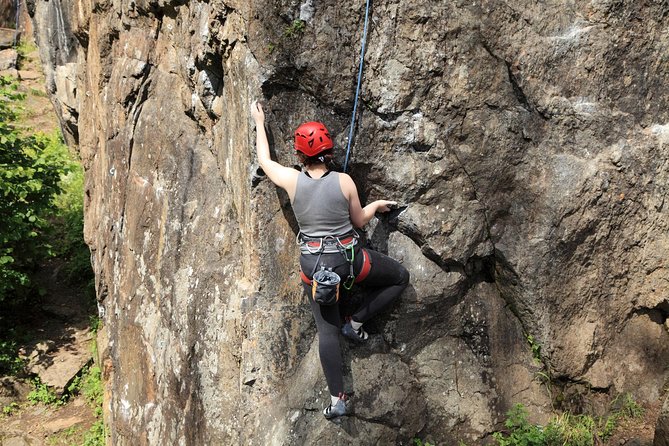
The course is built around repeated climbing on multiple top rope routes outdoors—at least 5–6 routes, with unique rock types and features. That route variety matters more than people expect.
When you climb the same style of route over and over, you can fool yourself into thinking you’ve learned technique. But outdoor climbing teaches that technique adapts. You’ll practice basic movement on rock faces and cracks, and you’ll feel how grip and body position change with different features.
You also get the payoff of outdoors: natural rock texture, open air, and the sense that you’re learning a real sport, not just doing drills.
Many beginners worry they need upper-body strength or prior experience. The tone of past experiences suggests you don’t need to be an athlete to enjoy this format. With patient instruction, you can reach the top on many of the routes in most areas you’ll try during the day.
What you should expect, though, is instructor-led adjustment. In one example, Glen helped choose more challenging options once the group got comfortable. That’s a good sign. It means the day isn’t stuck at one difficulty level, and you can grow without getting thrown into something way beyond your current comfort.
The hike and the cliff: how the day unfolds at the crag
After meeting in Ballard, you’ll take a short hike to the cliff face. That hike is part of the lesson because it gets you into the outdoor mindset and gives time for a safety and skills discussion before you start climbing.
Once you’re at the crag, the rhythm is usually: set up, gear checks and knots, belay instruction, then climb cycles with on-the-spot coaching. Because the course emphasizes practicing both climbing and belaying, you’ll likely spend a meaningful chunk of time switching between roles.
You should feel comfortable asking questions during those transition periods. The instructors are there to make sure you understand what you’re doing before you do it again.
If you’re prone to nerves, this kind of pace helps. You’re not thrown into a single make-or-break climb. Instead, you build comfort step by step—especially with belay practice.
When Seattle weather shifts: being flexible keeps the day climbing
Seattle-area outdoor plans can change quickly. If the weather near Seattle doesn’t cooperate, the instructors may shift the location to keep the experience going.
One real example: a pair expected a Seattle-area climb, but weather pushed the group east to Frenchman Coulee for the day. Even with a near two-hour drive, the time didn’t feel wasted because the instructor used the drive to talk and connect with the group.
That flexibility is a plus for you. You’re booking a guided learning day, not a guarantee of one specific view. If clouds or wind change the plan, the value still stays the same if you still get your coaching and routes in.
Keep in mind you’re planning for outdoors, so wear layers you can adjust and bring a backup plan for staying warm if the crag conditions feel chilly.
Value and fit: who should book this Seattle outdoor climbing intro
This course feels like strong value if you want real outdoor top-rope training without buying a pile of gear first. Instruction is the main product here, and key safety components are included: materials for top-rope set-up, belay devices, and a group medical kit.
You’ll still need to plan for rentals. Harness, helmet, and rock shoes are not included as personal gear, though rentals are available. If you already own good climbing shoes and a harness, you’ll still benefit from learning the top-rope system and practicing belaying with a guide watching your technique.
Best fit:
- You’re a true beginner or near-beginner and want outdoor skills, not just indoor practice.
- You want to learn in a small group so you get correction and encouragement.
- You’re comfortable with moderate physical activity and the idea of a short hike.
Less ideal if:
- You want a low-commitment, all-sitting learning style. This is hands-on climbing and belaying.
- You’re not ready for outdoor variability. Weather can move the plan and add driving time.
Also worth noting: the experience is offered in English, and you receive confirmation within 48 hours of booking, subject to availability.
Should you book this? My practical take
If you want a clear path into outdoor top-rope climbing—knots, gear, belaying, then multiple climbs—this is a smart one-day choice. The big reason is the balance: you’re not just climbing once. You’re practicing the skill that keeps you (and your partner) safe: belaying.
Book it if you value hands-on coaching, small group attention, and learning enough to feel ready for an indoor belay test later. Skip it if you hate being outdoors in changing conditions or you can’t do the moderate physical demands.
If you’re on the fence, think about your current situation. If you already know how to belay and just want routes, you might need something more advanced. If you’re starting from scratch, this course gives you the fundamentals you’ll actually use again.
FAQ
What’s the meeting point and start time?
You meet at Miyar Adventures, 1120 NW Ballard Way, Seattle, WA 98107. Start time is 9:00am, and the activity ends back at the same meeting point.
How long is the experience?
It’s a 1-day experience (approximately).
Do I need climbing experience?
This is an introduction meant for beginners. The focus is learning fundamentals like gear, knots, climbing commands, and top-rope belaying.
What skills will I learn?
You’ll learn climbing gear fundamentals (including harness, helmets, biners, belay devices), climbing knots, climbing commands, how to belay and catch a fall, basic technique for rock faces and cracks, and top-rope climbing and safety/ethics.
How many routes will I climb?
You’ll climb on at least 5–6 top-rope routes outdoors.
What’s included, and what do I need to rent?
Included: instruction, materials for top-rope set-up (including ropes and anchor materials), a group medical kit, and belay devices. Not included: harness, helmet, and rock shoes (rentals are available). Chalk bag with chalk is optional.
Is transportation provided?
No. Transportation is not included.
What fitness level do I need?
You should have a moderate physical fitness level.
How big are the groups?
There’s a maximum of 6 travelers per booking, with a minimum of 2 people per booking.