REVIEW · SEATTLE
Tulip Festival at Skagit Valley ,La Conner and Deception Pass
Book on Viator →Operated by BARBIL TOURS · Bookable on Viator
Spring color in two different worlds.
This day trip pairs Skagit Valley Tulip Festival fields with dramatic Puget Sound views, plus a nature walk and a classic ferry-channel town stop. I love that you get a guide like Dwight, who doesn’t just point out sights—he gives you the story as you go. Private transportation and included park fees mean you spend less time planning and more time looking.
My favorite part is the mix of big visuals and small, calmer moments: tulip rows under Mount Baker’s looming backdrop, then Kukutali Preserve with short trails where you might spot fish and shellfish along the shoreline. The one real drawback to consider is the weather—one guest noted it was super cold—so you’ll want warm layers even if you’re chasing flowers.
In This Review
- Key Points to Know Before You Go
- Skagit Valley Tulips Begin in Mount Vernon River Country
- Skagit Valley Tulip Festival Fields: Big Color, Real Geography
- Kukutali Preserve: A Short Walk With Serious Shoreline Life
- Deception Pass State Park: Rugged Coast, Cliffs, and Quiet Awe
- The Deception Pass Bridge: One Viewpoint, Lots of Drama
- Getting Back to Seattle: A Clean, Easy Finish
- Price and Value: What $295 Buys You (and What It Doesn’t)
- Who This Trip Fits Best
- Practical Tips for a Cold-Coast Tulip Day
- Should You Book This Tour?
- FAQ
- How long is the tour?
- Where does the tour start and end?
- Is pickup offered?
- Does the price include park entrance fees?
- Are breakfast or lunch included?
- Do I need a paper ticket?
- What language is the tour offered in?
- How big is the group?
- What should I bring for the Deception Pass area?
- What is the cancellation policy?
Key Points to Know Before You Go
- Skagit Valley Tulip Festival: large-scale bulb country with Mount Baker and North Cascades in the background (think March–May).
- Bird-friendly stop in Mount Vernon: rivers and sloughs make it a good place to use binoculars.
- Kukutali Preserve: 93 acres and about two miles of trails, most on Kiket Island.
- Deception Pass State Park: cliffs, coves, beach walking, and Cranberry Lake for fishing and swimming.
- The Deception Pass Bridge: opened in 1935, and it frames the saltwater canyon from about 18 stories up.
- Small group size: max 14 people, with pickup from Bellevue.
Skagit Valley Tulips Begin in Mount Vernon River Country
If you want a spring day that feels like Washington’s greatest hits, this route hits hard. You start with a quick stop in Mount Vernon, a historic town built at the junction of rivers and sloughs—exactly the kind of place birds like. If you own binoculars, this is a good moment to use them. Even a short walk along the riverfront can turn into an accidental wildlife break while you wait for tulip season to do its thing.
Mount Vernon also acts like a warm-up act for the tulip valley. The Skagit River Valley is where you’ll see the valley’s identity come into focus: farmhouses, heritage barns, and huge swaths of bulb fields. This is also home to the largest commercial flower bulb industry outside of Holland, which is why the display can feel so massive and organized at the same time.
One practical note: the itinerary mentions a light breakfast on the way, but the tour doesn’t list breakfast as included. So I’d plan to eat beforehand or bring a snack, especially if you tend to get hungry early.
You can also read our reviews of more tours and experiences in Seattle.

Skagit Valley Tulip Festival Fields: Big Color, Real Geography
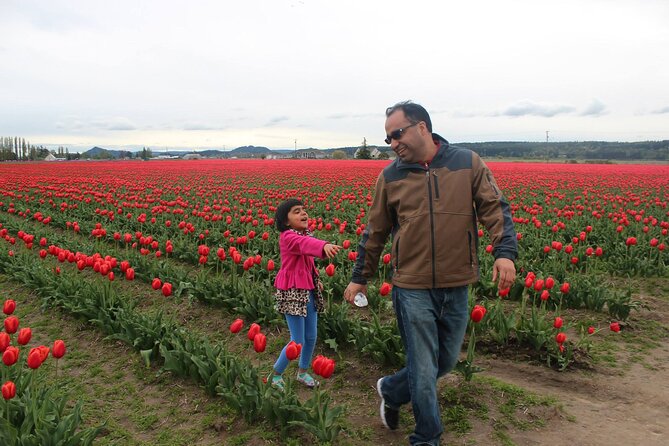
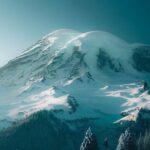
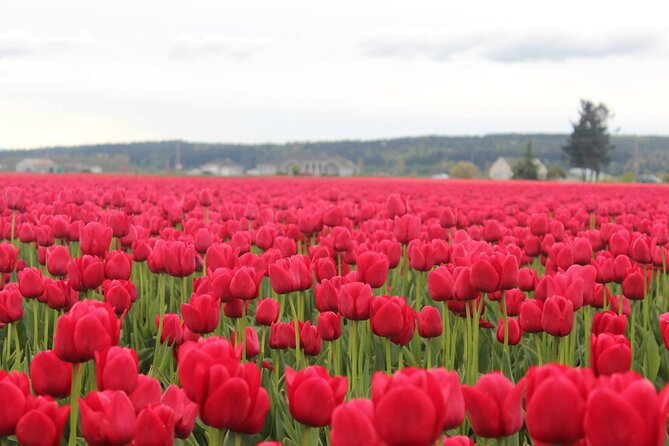
The tulip fields here aren’t just pretty rows. They sit in a real working landscape with a strong geographic setting. You’ll drive deeper into the valley and see how the farms relate to the landforms around them. On clear days, the views can include Mount Baker (10,781 feet) and the North Cascades, which adds a dramatic background to the flowers.
For value, this is a smart inclusion because the festival season happens in a tight window (March through May). One of the strongest signals from the experience is timing: the best results come when you go in March or April. If your trip can flex, I’d aim for those months. Earlier tends to be cooler and crisp; later can be warmer, but the peak bloom timing can shift.
Photo tip that’s actually useful: don’t just photograph tulips. Step back and shoot the lines of fields with the mountains behind. That’s where the whole story shows up—the scale is the point.
Kukutali Preserve: A Short Walk With Serious Shoreline Life
After the big flower show, the day slows down with Kukutali Preserve, a 93-acre nature preserve created by the Swinomish Indian Tribal Community with Washington State Parks. The goal is conservation plus research and public education. Translation: it’s not just a “look around” stop. It’s part of a real effort to protect habitat and teach people about it.
You’ll have about two miles of hiking tracks, and most of that is on Kiket Island. The preserve’s shoreline is a standout detail. Along those waters, you might find fish species, shellfish, and eelgrass beds. Even if you’re not identifying marine life on the spot, it changes how you experience the coast—less postcard, more “this system actually matters.”
There’s also an optional add-on: a trip connected to Hellam’s Vineyard in La Conner. Whether it’s your thing depends on how much you like farm stops and tasting-style venues. If you’d rather spend that time walking or eating, you can keep the focus on the preserve.
Finally, there’s time for a waterfront meal in La Conner. The tour says lunch isn’t included, so I’d treat this as an on-your-own meal stop, but it’s a good one. La Conner is known for patio dining in summer, with historic buildings sitting on wood pilings over the water, so you’re close to the channel action.
Deception Pass State Park: Rugged Coast, Cliffs, and Quiet Awe
Then comes the coast. Deception Pass State Park is one of Washington’s most visited parks for a reason: it delivers dramatic terrain without making you do a long, exhausting trek. You’ll see mysterious coves, rugged cliffs, and that classic Puget Sound feeling—cold air, salt spray, and water that looks like it’s always moving.
This is also a park with variety for different energy levels:
- If you like water time, there’s Cranberry Lake, where families can fish and swim.
- If you prefer easy beach exploration, you can hunt for shells along Puget Sound beachfront areas.
- If you like a forest-and-bluff vibe, there are hiking options out toward the edges.
Wildlife chances are part of the appeal. You may see whales or seals as you look out over waters that challenged early explorers. Even when you don’t spot wildlife, the place still works because it gives you that “how is this real?” feeling when cliffs and water meet.
Practical drawback: this is an outdoors-heavy stop, and the experience can feel cold and windy depending on the day. One guest called it super cold, so I’d pack accordingly—warm layers, a wind layer, and shoes you don’t mind getting dusty or damp.
The Deception Pass Bridge: One Viewpoint, Lots of Drama
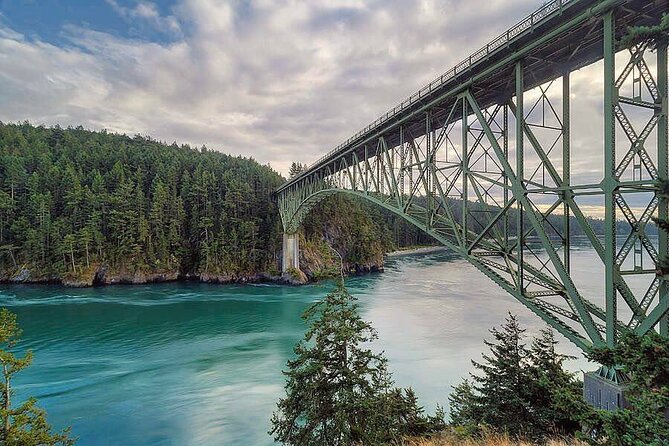
If Deception Pass had a single headline feature, it would be the bridge. The iconic span opened in 1935, and it sits about 18 stories above the water, which turns the saltwater canyon into a framed view. Depending on the tide, you can see ocean-water action that looks almost like waterfalls swirling through the canyon.
This is a great stop if you want a big payoff with limited time. You don’t need to hike far to appreciate the scale. It’s also where the photo quality can surprise you: the structure gives you geometry, and the shifting water gives you motion.
If you’re planning your day around best conditions, remember this is tide-dependent scenery. The day’s timing can affect how dramatic that canyon water looks, so don’t wait until you’re at the bridge to decide if you’ll be satisfied. Just show up ready to enjoy what’s happening right then.


Getting Back to Seattle: A Clean, Easy Finish
At the end, you head back to your drop-off location. The tour is built for a smooth day flow: pickup and drop-off are included, you have private transportation, and you also get bottled water.
That matters because the route involves multiple spots that are far enough apart that self-driving can mean stress. With this setup, you can keep your energy for enjoying rather than timing traffic.
Also, the group stays small—max 14—which helps the day feel more controlled. You’re not stuck in a huge bus where you only see the scenery through a windshield.
Price and Value: What $295 Buys You (and What It Doesn’t)
At $295 per person, you’re paying for a full spring sampler with several included costs. The ticket covers:
- Pickup and drop-off from Bellevue
- Private transportation
- Park entrance fees
- Bottled water
- Mobile ticket use and English-language guidance
What’s not included is the human part: breakfast and lunch. That’s not unusual, but it changes how you plan your spending. Budget for at least one meal stop, especially since the La Conner waterfront stop is a natural place to eat.
Is it good value? For me, it’s a solid buy if you don’t want to coordinate driving, parking, and park entry fees across multiple locations in a single day. It’s also worth it if you want a guide who can explain what you’re seeing—one review highlighted Dwight’s helpful info during the drive, and that sort of narration is often where the day feels worth the money, not just the photos.
If you already have a car and don’t care about guidance, you could DIY some of these stops. But you’d still need to manage timing between tulips, a preserve walk, and a major coastal park—this route handles the logistics for you.
Who This Trip Fits Best
This tour is a good match if you want:
- Classic spring scenery without committing to multiple days
- A guided route through Skagit Valley, a nature preserve, and Deception Pass
- Short-to-moderate walks rather than long hikes
- A small group day with enough structure to avoid getting lost
It’s also a good option for people who don’t want to take on the “what if the tulips are disappointing” problem alone. Even if bloom conditions aren’t perfect, the rest of the day still delivers with Deception Pass and the bridge viewpoints.
Who might want to skip it? If you’re the kind of traveler who wants hours of total freedom at one site, this format may feel time-limited. It’s a sampler, not a slow wander.
Practical Tips for a Cold-Coast Tulip Day
A few things will make your experience smoother:
- Bring warm layers. One guest mentioned it was super cold, and coastal Washington can feel sharp even when tulips are blooming.
- Wear grippy shoes. Beaches and coastal paths can get damp.
- Use binoculars at Mount Vernon. That bird activity around rivers and sloughs is part of why this stop is there.
- Dress for wind at Deception Pass. The cliffs and bridge areas can be breezy.
- Plan your meal budget. Breakfast and lunch aren’t included, even though there’s time for food later in the day.
- Keep your camera charged. You’ll be moving between wide fields, shoreline settings, and the high bridge viewpoint.
One more reassurance: service seems to matter here. There’s an example of staff helping recover a dropped phone hours later, which tells me the team takes care of people when things go sideways. That kind of support is rare, and it’s worth appreciating on a long day.
Should You Book This Tour?
I’d book this if you want one day that covers three different sides of Washington: spring agriculture, protected coastal habitat, and iconic cliffs and bridge views. The included park fees and transportation reduce friction, and the guide support makes the route feel more like a learning-friendly day than a checklist.
I’d think twice if you hate cold weather, dislike structured timing, or you’re only in it for one location (like tulips only). If you go, go ready with layers, and aim for March or April when bloom and photo results are most likely to feel magical.
If you want tulips plus real coast scenery, this is one of the cleaner ways to do it from the Seattle-area base.
FAQ
How long is the tour?
The tour runs about 10 hours.
Where does the tour start and end?
It starts at Bellevue Transit Center, 10850 NE 6th St, Bellevue, WA 98004, USA, and ends back at the meeting point.
Is pickup offered?
Yes. Pickup and drop-off are included, and the pickup details are sent by text message about the approximate location and time.
Does the price include park entrance fees?
Yes. Park entrance fees are included.
Are breakfast or lunch included?
No. Breakfast and lunch are not included.
Do I need a paper ticket?
No. The tour uses a mobile ticket.
What language is the tour offered in?
The tour is offered in English.
How big is the group?
The tour has a maximum of 14 travelers.
What should I bring for the Deception Pass area?
Plan for cold and wind. The experience is outdoors with coastal cliffs and beaches, so warm layers and sturdy shoes help.
What is the cancellation policy?
You can cancel up to 24 hours in advance for a full refund.