REVIEW · SEATTLE
Seattle Indoor Skydiving Experience with 2 Flights & Personalized Certificate
Book on Viator →Operated by iFLY Indoor Skydiving · Bookable on Viator
You can fly without a plane ticket. This iFLY Seattle indoor wind-tunnel experience lets you float on a steady column of air, with two flights and coaching that keeps first-timers calm. You’ll hit speeds that feel wild—without the jump.
What I really like is the one-on-one instruction inside a small group setting, plus the training session that teaches you how to position your body safely before you ever get up to full speed. Another strong point: you leave with a personalized certificate of flight achievement, which makes the whole thing feel like a real accomplishment.
One thing to consider: the actual time you’re “in the air” is short—two runs of about 60 seconds each—so this is best if you want a fast, adrenaline hit more than a long activity.
In This Review
- Key Things That Make iFLY Seattle Worth Your Time
- Entering the Wind Tunnel in Tukwila: What the Experience Really Feels Like
- The Training Session: How You Learn to Fly (Safely) Before You Go Fast
- Two Flights Inside the Chamber: The 60-Second Structure That Makes It Add Up
- Check-In and What to Wear: Small Choices That Prevent Big Annoyances
- Price and Value: Is $110.39 for Two Flights a Fair Deal?
- Who Should Go (and Who Should Skip It)
- Flying vs. Watching: How to Build a Day Around It
- What You Actually Take Home: The Certificate and the Confidence Boost
- Should You Book iFLY Seattle? My Practical Take
- FAQ
- How long does the Seattle indoor wind-tunnel experience take?
- Do I need any experience to fly?
- How long is each tunnel flight?
- What is the minimum age to participate?
- Are there weight restrictions?
- What should I wear for the flight?
- Can friends or family watch without participating?
Key Things That Make iFLY Seattle Worth Your Time
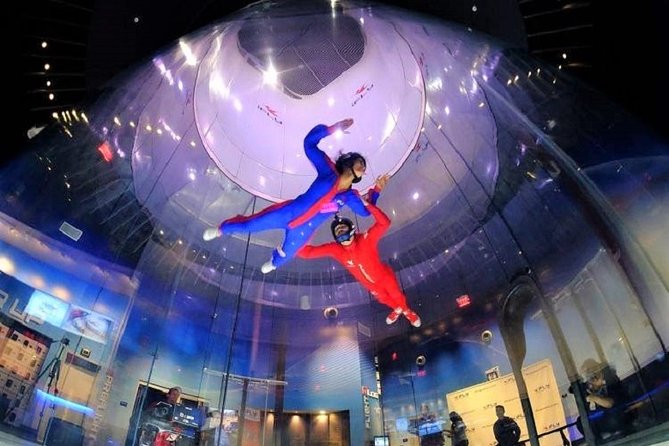
- Beginner-ready coaching: you’re guided step-by-step, and you don’t need experience
- Two flights, not just one: you get two 60-second tunnel sessions with an instructor
- Small-session setup: limited group size (up to six), so you get focused attention
- Wall-to-wall airflow safety feel: steady air helps you stay stable instead of free-falling
- Speed without the plane: the wind tunnel can reach intense speeds while staying controlled
- A keepsake certificate: your flight achievement is recognized with a personalized certificate
Entering the Wind Tunnel in Tukwila: What the Experience Really Feels Like
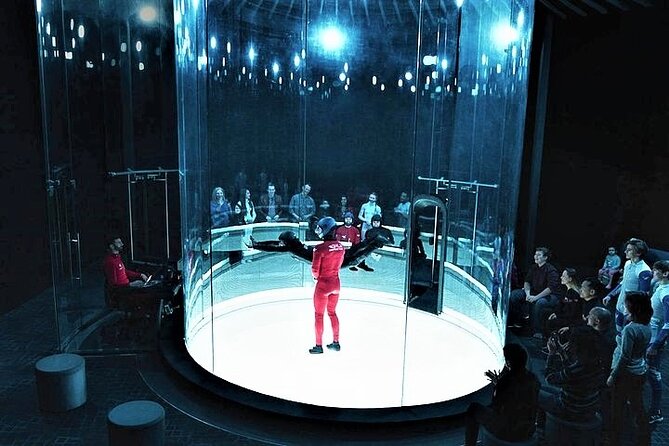
The magic of the iFLY setup is that it mimics the sensation people chase in the real thing—head-up stability, controlled body position, and that sudden “I’m flying” moment—without leaving the ground. In Seattle (Tukwila), you’ll be at iFLY’s indoor facility, suited up, and then worked through the basics before you ever go for the full experience.
The wind tunnel itself is the show. It uses a powerful airflow system (described as an 800-horsepower vertical wind tunnel) to create a cushion of air. That steady air column is the secret sauce. Instead of dealing with random turbulence or worrying about balance, you’re supported by wall-to-wall airflow that helps you float.
If you’re nervous, this matters. Many first-timers assume they’ll need “talent” to stay upright. Here, the goal is simple: follow your instructor’s cues and let the airflow do the heavy lifting. And because you fly one-on-one with an instructor during your short runs, the focus stays on what you need to do.
You can also read our reviews of more tours and experiences in Seattle.


The Training Session: How You Learn to Fly (Safely) Before You Go Fast
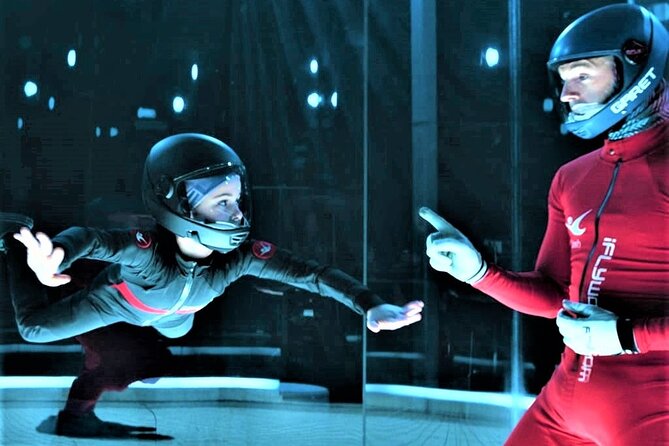
Before your first tunnel flight, you go through a specialized training session with an expert flight instructor. This is not a vague pep talk. You’ll practice positioning and learn what safe flight looks like in the tunnel—how to hold your body so the airflow supports you.
Then the tunnel operator takes over and gradually increases wind speed. That ramp-up is a big deal for comfort. You’ll start calm, then you’ll feel the adrenaline rise as the speed builds toward the range listed for iFLY (roughly 130 to 175 mph, or 209 to 282 kph). It’s intense, but it’s controlled.
You also stay connected to your instructor the entire time inside the chamber. That continuous guidance is why this can work even if you’ve never done anything like it. You’re not left to figure out a new body position while scared. You’re coached while you learn.
Two Flights Inside the Chamber: The 60-Second Structure That Makes It Add Up
Each session is built around two tunnel flights. You fly for about 60 seconds in the wind tunnel twice—again, with an instructor right there to guide you. Between the runs, you regroup and reset your body position based on what you learned.
Here’s what that means for your expectations:
- You should plan this like an adrenaline activity with short, high-impact moments.
- You don’t get a long “hang out in the air” experience; you get two chances to nail the feeling and try again.
- If you like improving on something immediately, the two-run format is satisfying—because the second flight benefits from the first flight’s lessons.
Some people also like pushing themselves. One of the standout patterns in feedback is the idea that you may be able to go higher during your experience if you’re feeling good. If that offer comes up, it’s worth paying attention to your instructor’s guidance and asking what changes as the tunnel run progresses.
Check-In and What to Wear: Small Choices That Prevent Big Annoyances
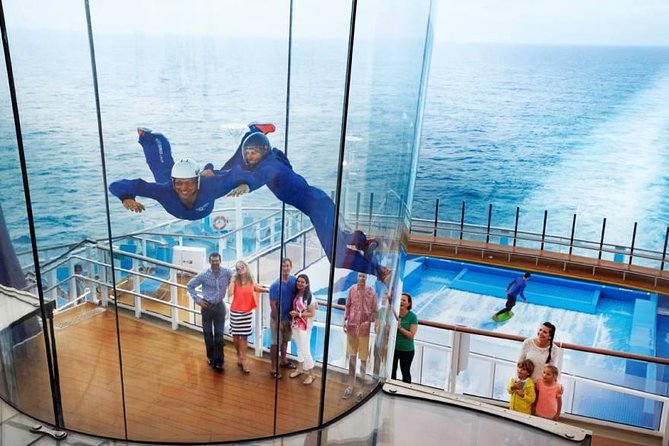
Your experience starts at iFLY Seattle at 349 Tukwila Pkwy, Tukwila, WA 98188. When you arrive, plan to check in and be ready to start promptly. It’s recommended you get there 10–15 minutes early so you don’t feel rushed during gear up and training.
What you wear matters more than people expect because you’ll be putting on a flight suit over your clothes. Stick to the basics:
- Well-fitting, lace-up sneakers or running shoes
- Comfortable clothes, ideally pants and a shirt without a collar
- If you have long hair, keep it in a braid or low bun
Also, remove anything that can flap or become loose: jewelry (including earrings, necklaces, bracelets, rings), watches, and hair accessories. Empty your pockets too. Lockers are available, but it’s still smart to leave valuables at home.
Glasses are allowed. iFLY provides larger goggles that fit over eyeglasses, so you’re not forced into the contact-lens dilemma.
If you’re thinking about the vibe: the facility is indoor, controlled, and focused on safety gear and briefing. You’re not going to be wandering around outside in cold weather or trying to read wind direction. The environment stays the same every time.
Price and Value: Is $110.39 for Two Flights a Fair Deal?
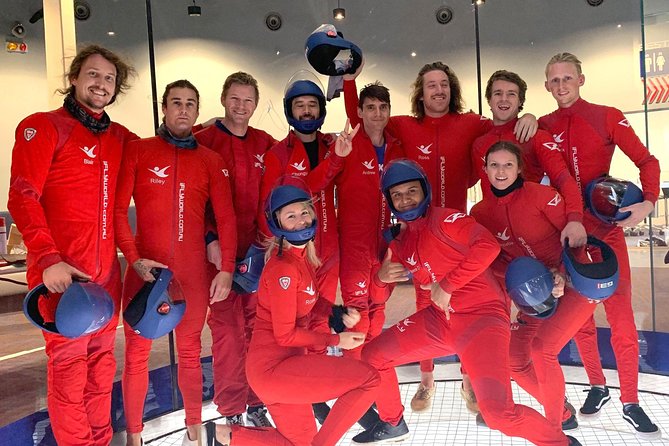
At $110.39 per person for two flights plus training, the price can feel steep—especially because the “in the air” time is only about two minutes total. But here’s the value math that makes it make sense.
You’re paying for:
- Expert coaching (not a self-guided video game)
- Gear and flight suit use
- Access to the wind tunnel and safe operating procedures
- Two separate flights, which lets you learn and improve quickly
- A certificate of flight achievement, so it feels like an actual milestone
If you compare it to paying for instruction time plus equipment rental in other “try something new” activities, iFLY tends to line up better than you might expect. The key is to treat it as a premium, short-burst experience. You’re buying the sensation and the coaching, not a full half-day adventure.
If you’re traveling with kids, the value story changes. Many families go because kids get a real physical thrill and a concrete accomplishment. If your crew likes activity-based fun more than sightseeing, this kind of price can be easier to swallow.
One practical heads-up: food and drinks aren’t included. So if you’re building the day, budget for snacks nearby—or plan a meal before or after.



Who Should Go (and Who Should Skip It)
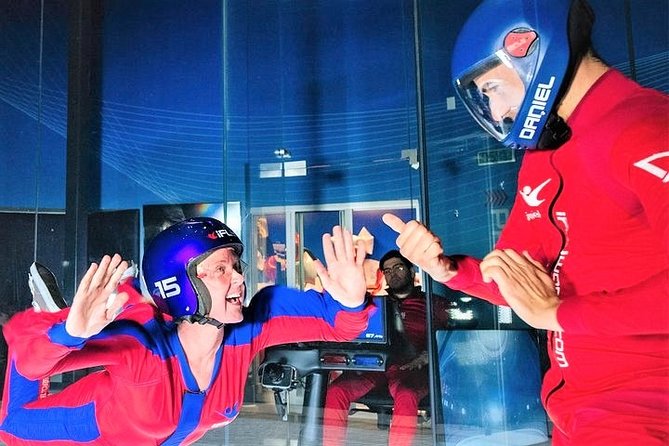
This experience is designed to be approachable for beginners. Most people can participate, and the training makes a big difference.
However, the restrictions are clear and worth respecting:
- You can’t fly with previous neck, back, heart injuries, or shoulder dislocations
- You can’t fly if you’re pregnant
- You can’t fly if you’re wearing a hard cast
- Minimum age is 3 years
- Under 18 needs a parent or guardian to sign the waiver
Weight limits are also part of the safety plan:
- You must weigh under 300 lbs
- If you weigh between 260 and 300 lbs, you’ll need an evaluation at check-in to see if you can be accommodated, and restrictions may apply
If you’re scared of heights, that doesn’t automatically disqualify you. Indoor tunnel flight doesn’t work like standing on a ledge. Still, if you have any condition on the restriction list, get the green light before booking.
Flying vs. Watching: How to Build a Day Around It
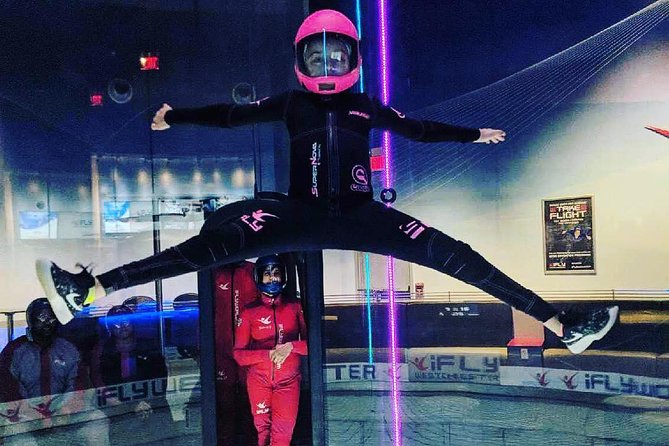
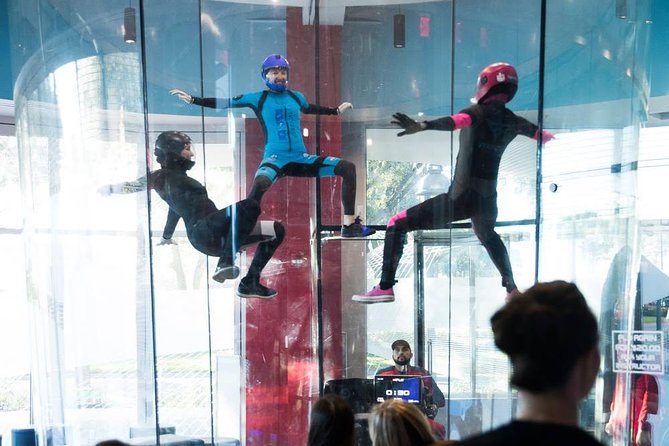
Not everyone in your group has to fly. If someone chooses to watch, they can accompany you through the experience and wait in the observation area.
This is helpful if:
- You’ve got mixed comfort levels in your group
- You want kids or a nervous adult to see how the instruction works before they decide
- You want photos and video moments without anyone else needing to suit up
Timing is another reason to bring a watcher along. The session includes training and the two tunnel runs, so the waiting time isn’t endless, but it’s long enough that having someone set up in the observation area keeps the day smooth.
What You Actually Take Home: The Certificate and the Confidence Boost
The standout “completion” piece is the certificate of flight achievement. It’s not just a tech demo; it’s a framed moment that says you did the thing safely and correctly.
And confidence builds fast here. You’ll likely feel nervous at the start, then notice how quickly your body adapts once you understand the cues and get stable positioning. That shift—from fear or confusion to control—tends to be the part people remember, not the mechanics alone.
One detail worth noting: some people have had issues with getting the right pictures or videos from add-ons they paid for. If you want those, double-check the process and confirmations during check-in. It’s the easiest way to prevent a frustrating end-of-day surprise.
Should You Book iFLY Seattle? My Practical Take
Book it if you want a safe, instructor-led first-time experience that delivers a real adrenaline hit without jumping from a plane. The two flights, the one-on-one coaching, and the short, repeatable runs make it a strong choice for birthdays, couples, and groups that want an action activity in Seattle.
Think twice if you:
- Hate the idea of short, intense bursts more than long experiences
- Are dealing with any injury or medical restriction listed for flight
- Are sensitive to the fact that food and drinks aren’t included, meaning you’ll need to plan the rest of your day
If you’re on the fence, here’s a simple decision test: if you’d enjoy learning a physical skill for about an hour-plus, then you’ll probably love it.
FAQ
How long does the Seattle indoor wind-tunnel experience take?
It takes about 1 hour 15 minutes to about 1 hour 30 minutes from start to finish.
Do I need any experience to fly?
No experience is necessary. You’ll get training and one-on-one guidance from a certified flight instructor.
How long is each tunnel flight?
Each flight in the wind tunnel lasts about 60 seconds, and you get two flights.
What is the minimum age to participate?
The minimum age is 3 years.
Are there weight restrictions?
Yes. You must weigh under 300 lbs. If you weigh between 260 and 300 lbs, you’ll need additional evaluation at check-in.
What should I wear for the flight?
Wear well-fitting, lace-up sneakers or running shoes and comfortable clothes. It’s recommended to wear pants and a shirt without a collar.
Can friends or family watch without participating?
Yes. If someone chooses to watch, they can accompany you and watch from the observation area.