REVIEW · SEATTLE
Seattle: The Museum of Flight Entry Ticket
Book on GetYourGuide →Operated by The Museum of Flight · Bookable on GetYourGuide
Planes with stories crowd your day. The Seattle Museum of Flight is a big, hands-on air-and-space museum where you can compare eras of flight up close. With an audio guide in multiple languages and major aircraft displays, it’s built for both aviation geeks and curious first-timers.
Two things I really like are the museum’s 150+ aircraft collection and the way the Personal Courage Wing turns wartime aviation into human-scale stories. One thing to plan for: the campus is large, so you should expect at least 3 hours if you want to see most galleries without rushing.
In This Review
- Key highlights worth your time
- Seattle Museum of Flight entry ticket: what makes it different
- Price and value: getting $29 to work for you
- The museum is huge: plan your route around five galleries
- Aviation Pavilion and aircraft “wow moments” on the main campus
- The Great Gallery: where aircraft feel like they’re floating
- Space Gallery and the NASA Space Shuttle Trainer mockup
- Personal Courage Wing: World Wars through the people behind flight
- Cockpits, rare spy planes, and the jets that changed the rules
- Simulators and the optional 3D movie: plan time, not just money
- Audio guide in 7 languages: use it like a shortcut
- Clear-day timing: views from the T. Evans Wyckoff Memorial Bridge
- Practical tips that make your visit smoother
- Who this museum fits best
- Should you book the Seattle Museum of Flight entry ticket?
- FAQ
- What does the entry ticket include?
- How long should I plan to spend at the museum?
- What time is last admission?
- Are flight simulators included in the ticket price?
- Is the 3D movie included?
- What languages are available for the audio guide?
- Is the museum wheelchair accessible?
- Are there restrictions on what I can bring?
Key highlights worth your time
- 150+ aircraft on display across multiple galleries, including rare Cold War and Vietnam-era jets
- Full-scale Space Shuttle Trainer mockup plus a Space Gallery focused on astronaut training
- Hands-on feeling with cockpit access moments like the Boeing 747 area
- Personal Courage Wing bringing World Wars to life through pilot and support roles
- Clear-day views from the T. Evans Wyckoff Memorial Bridge toward the airport and Mount Rainier
Seattle Museum of Flight entry ticket: what makes it different
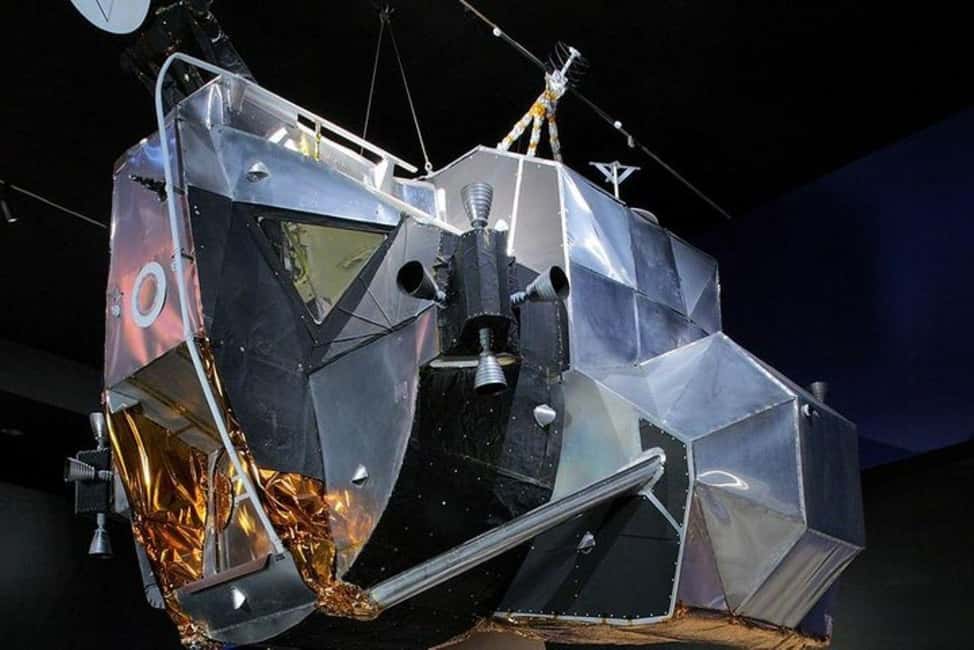
If you’re even mildly interested in how flight evolved, this museum has a way of making it feel physical. You’re not just reading placards. You’re standing next to planes that shaped real missions, real wars, and real technology leaps.
The museum is the world’s largest private air and space museum, and that scale matters. You get one ticket that covers five separate galleries across a large, two-sided campus. That’s great value if you like walking and comparing aircraft from different decades side by side.
I also like that it doesn’t treat “air and space” as separate worlds. You move from historic aircraft—think cockpits and early aviation milestones—to a Space Gallery centered on astronaut training and a full-sized Shuttle Orbiter mockup.
You can also read our reviews of more tours and experiences in Seattle


Price and value: getting $29 to work for you
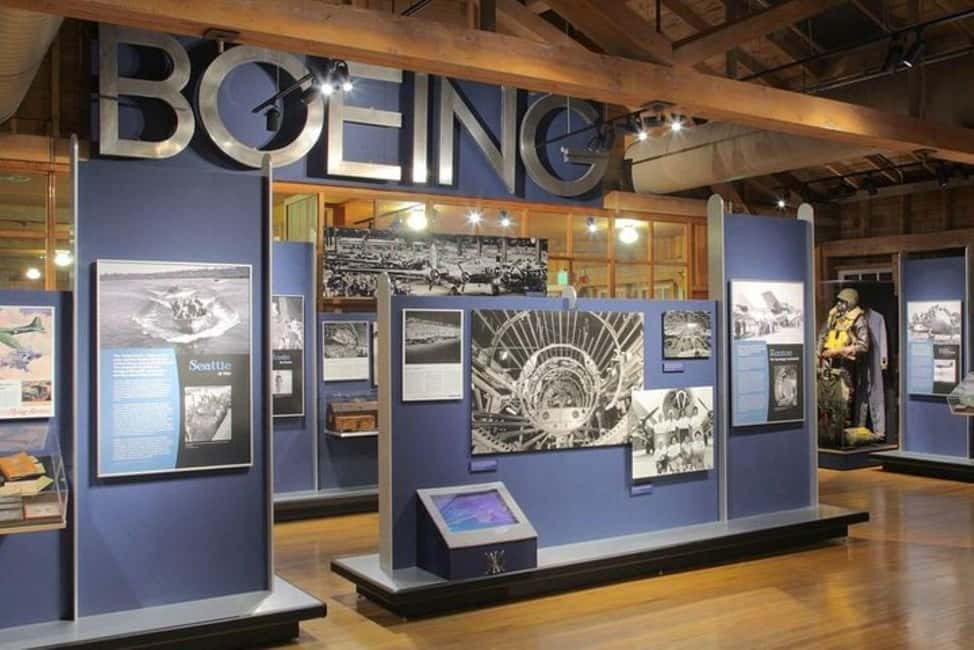
An entry ticket at $29 per person is a solid deal if you use the time and don’t miss the big indoor galleries. This ticket covers admission, audio guide access, and the main aircraft displays.
A couple of things are not included:
- Simulator tickets (sold separately)
- The 3D movie (optional, extra cost)
That doesn’t make the ticket less worthwhile. It just means you should decide how “hands-on” you want to be. If you want simulator time, build that into your schedule budget. If you’re more of a stand-and-study person, you can still have an excellent day without paying more.
Here’s my practical take: this museum rewards people who slow down. If you rush, you’ll miss why the collection works—rare planes paired with context, plus spaceflight artifacts that connect to what came before.
The museum is huge: plan your route around five galleries
The biggest logistical reality here is size. The Museum of Flight covers five separate galleries across a two-sided campus. The museum itself is large enough that you’ll want a buffer, not a tight stopwatch plan.
A good rule: plan at least 3 hours to see most exhibits. If you’re the type who reads every aircraft description and wants to sit for a few moments, stretch it longer.
Practical strategy I’d use:
- Start with the gallery that matches your main interest (aircraft history vs. spaceflight training).
- Then cross to the other side before you get tired.
- Save simulators for later in the day, when you can tell whether you still have energy.
Also pay attention to timing: last admission is at 4:00 PM, and the museum closes at 5:00 PM. If you arrive late, you’ll still be able to enjoy a lot—but you won’t see everything.
Aviation Pavilion and aircraft “wow moments” on the main campus
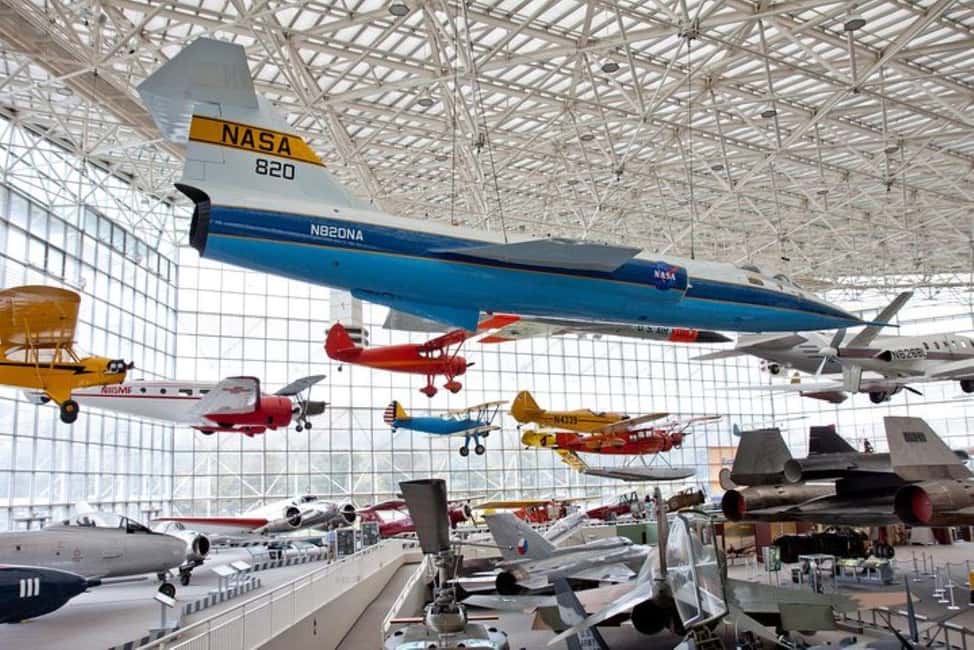
This is where you feel the museum’s aircraft obsession immediately. The Aviation Pavilion and related areas bring together iconic names and a mix of experimental, commercial, and military machines.
What I’d call the “you’ll remember this” lineup includes:
- A Boeing 747 cockpit experience, plus a display connected to the first flight-worthy Boeing 747
- A glass gallery holding the human-powered MacCready Gossamer Albatross II
- A replica of Amelia Earhart’s ill-fated aircraft
What makes these displays valuable is how they show different kinds of flight goals. It’s not only about speed. You get the story of endurance, design ambition, and human effort—then you jump toward military aviation and later spaceflight technology.
If you care about aircraft detail, bring patience. You’ll be scanning finishes, engineering cues, and restoration quality. And because the collection spans many periods, you get that satisfying feeling of comparing the “before” and “after” of aviation design.
The Great Gallery: where aircraft feel like they’re floating
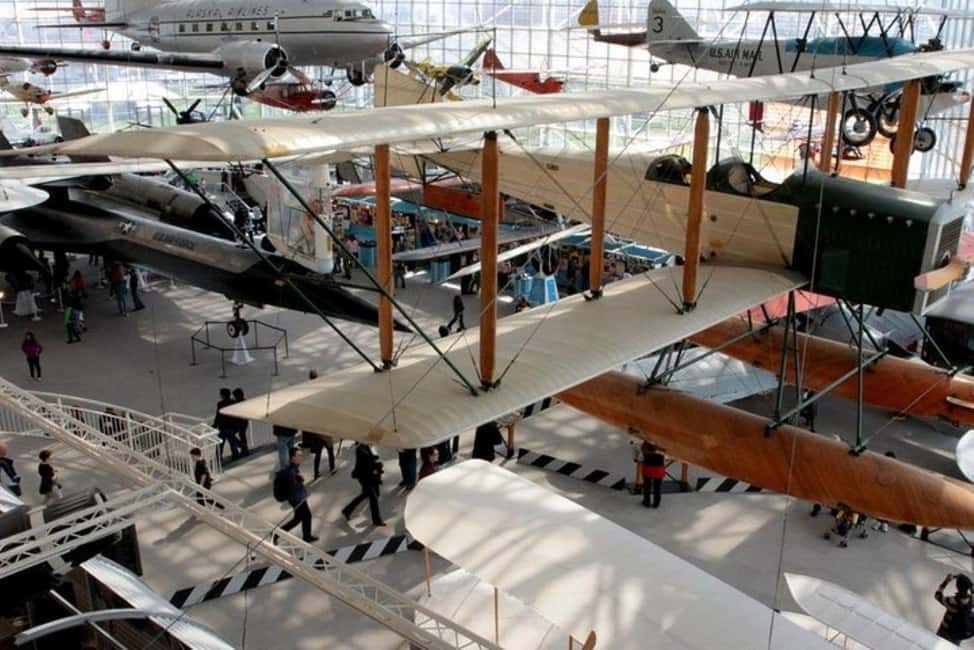
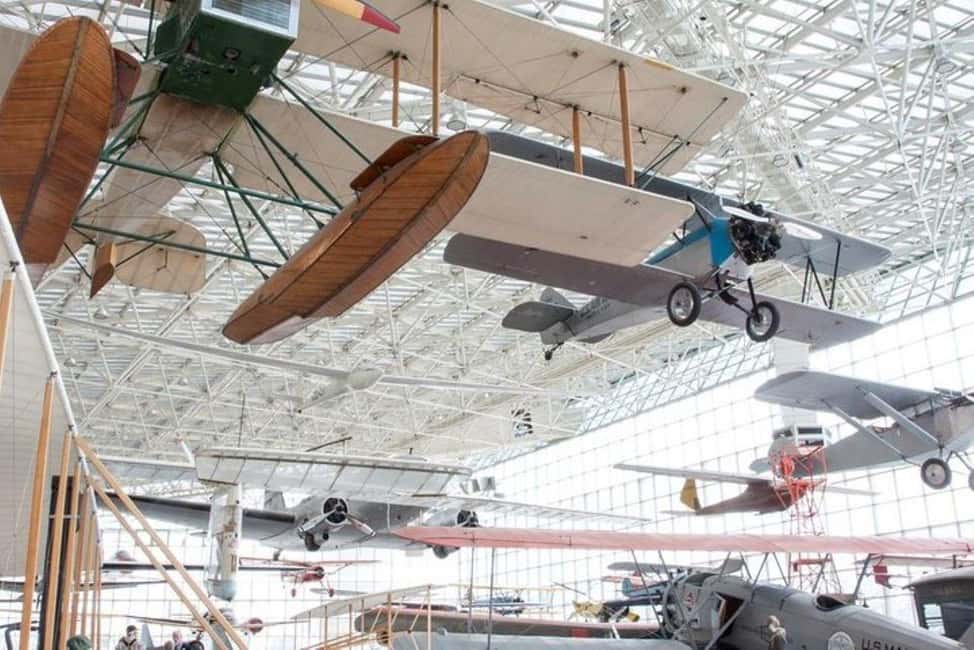
One of the museum’s stand-out architectural experiences is the Great Gallery, where planes seem suspended mid-air. This matters more than you might think. A lot of museums display aircraft like furniture. Here, the room design helps you “read” the aircraft shapes as part of the space.
As you walk through, keep an eye out for the way your path lines up with the aircraft. The big advantage: you’re not trapped in one angle. You can move around, take in proportions, and appreciate how huge these machines are.
If you’re traveling with kids, this is the part where their attention often clicks fast. It’s visual, dramatic, and easy to understand even without reading every label.
You can also read our reviews of more museum experiences in Seattle




Space Gallery and the NASA Space Shuttle Trainer mockup
If spaceflight is your main draw, don’t treat the Space Gallery like a quick stop. This is where you get the kind of object that makes a museum ticket feel worth it.
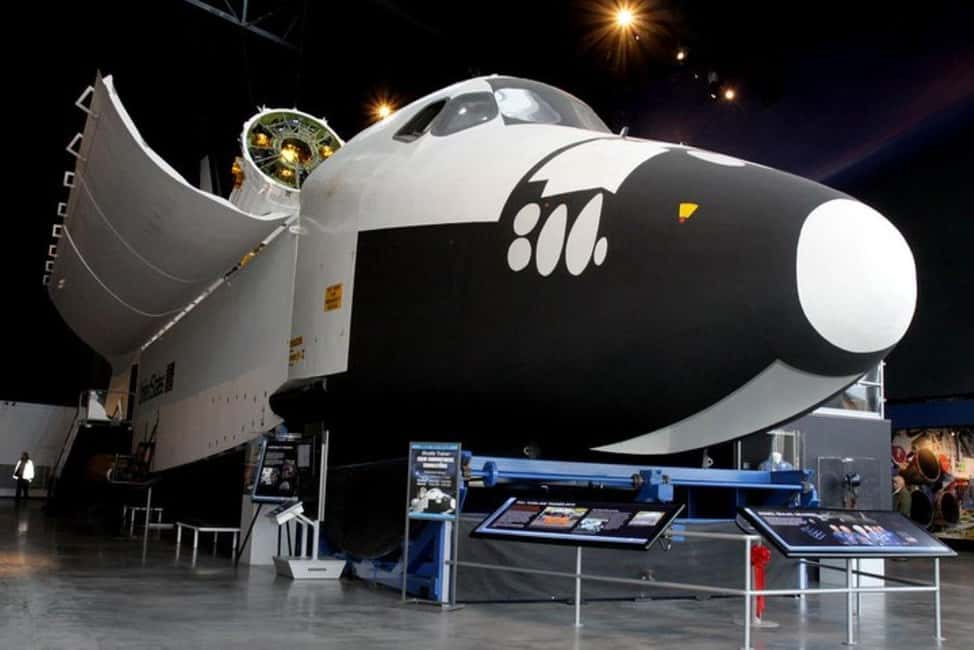
The centerpiece is a full-sized Space Shuttle Orbiter mockup used for astronaut training. Seeing something built at that scale gives you a different perspective on the Shuttle program. It’s one thing to watch launches on a screen; it’s another to understand the size and layout of the real training hardware.
You also get spaceflight in a multi-sensory way, not just a “look and move on” display. That approach makes it easier to connect Shuttle training to earlier aviation development—how people learned, practiced, and solved problems.
I also recommend planning a pause here. The gallery is the most likely part of your day to make you slow down and just look.
Personal Courage Wing: World Wars through the people behind flight
The Personal Courage Wing focuses on World Wars through pilot and support roles—pilots, nurses, photographers, and other crew. That human framing is the reason this section tends to land well for first-timers.
When a museum talks about history only through aircraft and dates, it can feel distant. This wing does the opposite: it pushes the story toward what people did, how they worked, and what their roles required.
Even if you’re not a military aviation person, this section helps you “place” the airplanes within real-world operations. It’s also a good pacing break from the technical aviation galleries.
I like it because it adds meaning to what you’re seeing elsewhere. After learning the human side, aircraft displays feel more like tools used in specific moments—not just preserved metal.
Cockpits, rare spy planes, and the jets that changed the rules
One reason this museum keeps coming up for aviation enthusiasts is that it goes beyond mainstream aircraft and includes rare and historically important pieces.
Some of the standout names to look for include:
- The rare M-21 Blackbrid spy plane
- Jet fighters from the Korean and Vietnam Wars
You don’t need to know every model name to enjoy this part. What helps is having the context available nearby—then noticing how jet design evolved during different conflict needs.
If you’re the kind of traveler who likes learning “one new thing per gallery,” this museum supports that well. You can pick a thread—reconnaissance aircraft, jet evolution, or human-powered flight—and follow it through multiple displays.
Simulators and the optional 3D movie: plan time, not just money
The museum has flight simulators, but simulator tickets are not included. It also offers a flight-themed 3D movie that costs extra.
So how should you handle this? Think of them as add-ons, not requirements.
Here’s the decision logic I use:
- If you want physical interaction and a modern “wow” factor, budget for simulators.
- If your group likes short, structured presentations, the 3D movie can help start the day with momentum.
- If you prefer aircraft detail and quiet time, skip the extras and spend your energy where it matters most: the planes and the Space Gallery.
Because your total visit is constrained by last admission at 4 PM, it’s smart to pick one optional experience. Otherwise, you risk losing time to lines and schedule changes.
Audio guide in 7 languages: use it like a shortcut
The ticket includes an audio guide in German, Chinese, Russian, Japanese, English, French, and Spanish. That’s a major comfort feature if you’re traveling with mixed-language groups or if you simply want the quickest route to meaningful context.
I’d treat the audio guide as your “fast learning tool”:
- Use it most in the galleries where you want the big-picture story.
- Spend more time in the aircraft areas where you can compare details.
You’ll get more from your visit if you don’t try to listen to everything nonstop. Choose key pieces, then look at the aircraft while the narration gives you a frame for what you’re seeing.
Clear-day timing: views from the T. Evans Wyckoff Memorial Bridge
On clear days, you can head to the T. Evans Wyckoff Memorial Bridge for views over Seattle-Tacoma International Airport and Mount Rainier.
This is a great reminder that the museum sits in a world connected to real aviation. It’s not only a collection in a building—it’s also a vantage point in an actual flight corridor.
If you’re photo-minded, this is a good place to build in a short break. The view gives your eyes a rest after hours of aircraft and indoor lighting.
Practical tips that make your visit smoother
A few details to keep in mind:
- The campus is large: wear comfortable walking shoes. You’ll be moving between galleries.
- Last admission is 4:00 PM with a 5:00 PM close. Plan backwards from that.
- The museum doesn’t allow weapons or sharp objects, so keep your bag simple.
- If you want to reduce waiting, advance ticket purchase helps you skip the line.
- Audio guides are available in multiple languages, so it’s easy to stay together as a group.
Also, a fun planning detail: since you’re likely spending a minimum of three hours, consider arriving early enough to see at least two big galleries without feeling stressed. That way, if you decide to add simulators, you won’t be scrambling.
Who this museum fits best
This is a great pick if you’re traveling with:
- Aviation enthusiasts who like aircraft variety and restoration quality
- Families who need visual, walk-around exhibits and memorable airplane moments
- People interested in the human side of wartime aviation, not just hardware
- Travelers who want a day trip that mixes air history and spaceflight training
If your travel style is ultra-short and you hate walking, you might find it too big. But if you’re the type who likes to wander intentionally, this place rewards you.
Should you book the Seattle Museum of Flight entry ticket?
Yes—if you want a full day where you can see aircraft history and spaceflight training objects in one place for $29. The ticket gives you access to a major private aviation collection, a standout Space Shuttle training mockup, and World War storytelling through the Personal Courage Wing.
Book it if you can commit to time. Aim for at least 3 hours, and plan with last admission at 4:00 PM so you’re not cutting your day short. Skip it only if you’re looking for a quick, low-walking attraction or if you’re sure you won’t enjoy aircraft displays at this scale.
FAQ
What does the entry ticket include?
The entry ticket includes admission to the Museum of Flight and an audio guide.
How long should I plan to spend at the museum?
Plan for at least 3 hours to see the majority of exhibits, since the museum is very large with multiple galleries.
What time is last admission?
Last admission is at 4:00 PM, and the museum closes at 5:00 PM.
Are flight simulators included in the ticket price?
No. Tickets for the simulators are not included.
Is the 3D movie included?
No. The 3D movie is optional and costs extra.
What languages are available for the audio guide?
Audio guides are available in German, Chinese, Russian, Japanese, English, French, and Spanish.
Is the museum wheelchair accessible?
Yes, the museum is wheelchair accessible.
Are there restrictions on what I can bring?
Weapons or sharp objects are not allowed.