REVIEW · SEATTLE
Seattle Time Travel Exploration Game and Tour
Book on Viator →Operated by Questo · Bookable on Viator
Seattle walks get way more interesting with puzzles. This self-guided Seattle time-travel game sends you from the Elliott Bay waterfront to the Space Needle area, solving clues as you go. I like that you’ll hit major stops like the Space Needle and Olympic Sculpture Park, and you can also explore off-the-radar details like the Anne Frank chestnut tree and Seattle Cloud Cover. The one possible drawback: if the instructions or directions don’t line up with what you see on foot, you may lose time and end up doing extra backtracking.
Here’s the good part for your pace: there’s no tour guide, and you can pause whenever you want. The challenge is built for a phone, using the Questo app, and you’ll keep moving from clue to clue until you finish at the International Fountain. At $7.20 per person for about 1 to 1.5 hours, it can be great value, as long as you plan with a little buffer.
In This Review
- Quick Take: Key Things to Know Before You Start
- Seattle Time Travel by Phone: What This Is Really Like
- Your Route Starts at Elliott Bay: Father and Son Fountain to Pacific Science Center
- Seattle Center Clues: Peace Garden and Sonic Bloom to the Space Needle
- From Space Needle to Pop Culture: Museum of Pop Culture Clues
- Gates Foundation and Artist at Play: Rounding Out the Story
- Finishing at International Fountain: Where the Game Ends
- Value Check: Is $7.20 Worth It for a Phone Puzzle Tour?
- Timing Reality: 60–90 Minutes on Paper, More in Real Life
- Best-Case Stops vs. Where You Can Get Frustrated
- Practical Tips to Make the Game Feel Easy (Not Like Work)
- Who This Seattle Puzzle Fits Best
- Should You Book the Seattle Time Travel Exploration Game?
- FAQ
- FAQ
- How much does the Seattle Time Travel Exploration Game and Tour cost?
- How long does the experience take?
- Do I need a tour guide?
- What app do I use for the game?
- What landmarks and areas are included?
- Can I explore at my own pace?
- Is it available in English?
- Is there customer support if I get stuck?
- Is this activity suitable for kids?
- What’s the cancellation policy?
Quick Take: Key Things to Know Before You Start

- Phone-based clue solving (Questo app): You get directions and tasks right on your device.
- Self-paced stops: Each area gives you a new clue, and you can linger as long as you want.
- Big Seattle landmarks, plus surprises: Expect Space Needle, Museum of Pop Culture, Gates Foundation, and more.
- Built-in support: 24/7 customer help is part of the package.
- Private activity for your group: Only your group participates.
- Low price, but watch timing: The route is planned for roughly 60–90 minutes, though it can run long if you hit glitches.
Seattle Time Travel by Phone: What This Is Really Like

Think of this as a walking scavenger hunt that uses Seattle landmarks as your game board. You start at the Father and Son fountain near the Elliott Bay Trail, then follow clue-driven steps that take you through Seattle Center, past iconic architecture, and onward to places like the Museum of Pop Culture and the Bill & Melinda Gates Foundation.
You’re not herded by a guide. Instead, your phone hands you the next piece of the story and the next direction. That changes the feel of the day. If you want photos, breaks, or slower sightseeing, you control that. If you’d rather power-walk and solve quickly, you can do that too.
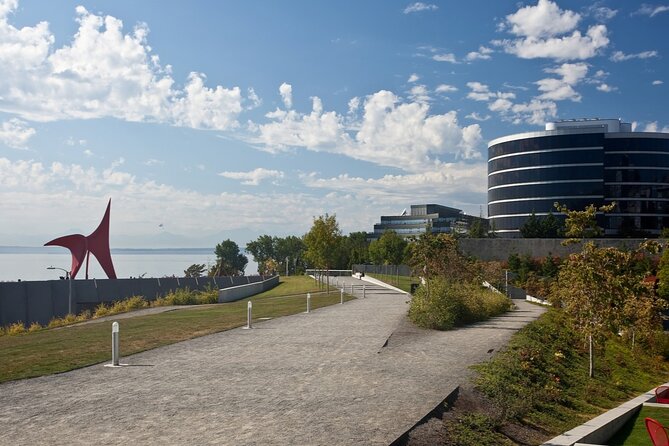
The best part is the mix of famous and specific. You’re not just doing the Space Needle photo. You’re nudged toward particular spots around the Seattle Center campus and nearby arts and public displays. The highlights specifically call out Anne Frank chestnut tree and Seattle Cloud Cover (the glass bridge and sculpture), which are the kinds of details that can easily get missed if you’re just following a standard route.
The “watch out” part is that a phone game depends on your ability to load instructions and follow the route as presented. When things don’t match the real world—signs change, entrances shift, directions aren’t crisp—your time can slip.
You can also read our reviews of more tours and experiences in Seattle



Your Route Starts at Elliott Bay: Father and Son Fountain to Pacific Science Center
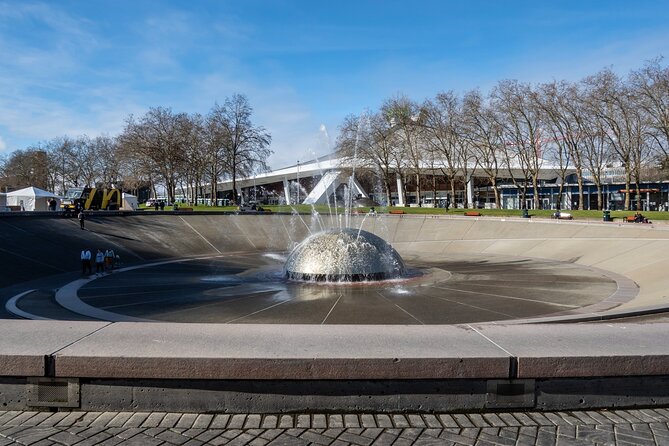
You begin at the Father and Son fountain by the Elliott Bay Trail. This is your first clue moment. In games like this, the first segment matters because it sets your rhythm: where you scan, where you stand, and how the app expects you to interpret the next step.
From there, your next clue lands you around the Pacific Science Center. This area is a good place to settle in. You can look around without feeling locked into a strict timeline, and it’s a natural transition from the waterfront vibe toward the larger Seattle Center area.
What makes this first stretch useful is how it helps you get your bearings. You’re moving from one clearly “Seattle” zone to another, while the puzzle keeps you engaged. It can also be a low-stress start if you’re not sure how quickly you’ll walk, because you don’t have to rush. Still, do yourself a favor: charge your phone, keep the screen brightness reasonable, and make sure you can access the game without fumbling.
A practical drawback: in at least one case, the path guidance wasn’t aligned with where you needed to go next, which can force detours or extra waiting. If you notice you’re being directed toward an area that looks fenced off or mismatched, don’t keep guessing. Use support rather than spiraling.
Seattle Center Clues: Peace Garden and Sonic Bloom to the Space Needle
After Pacific Science Center, the game brings you toward the Peace Garden at Seattle Center. This is more than a pretty stop. Puzzle-driven sightseeing works well here because the instructions usually make you look at a specific spot, not just the general area.
Next comes the Sonic Bloom sculpture. This kind of public art stop is perfect for a clue game: it’s visually distinct, it gives you a reason to slow down, and it helps you learn a piece of Seattle you might not have researched.
Then it’s time for the Space Needle. The game gives you a new clue around the Space Needle area, and again you can take your time. The value here is that you’re not only arriving at a landmark. You’re also moving through the Seattle Center campus in a way that helps you notice details.
One warning from real-world experience with clue tours: when directions are slightly off, the fix can be simple (a wrong turn), or it can be annoying (backtracking). If the app tells you to keep walking but the correct action is to go back, you’ll waste minutes fast—especially around crowded campus paths. If you’re ever unsure, stop moving, compare your position to what you see, and only continue when it makes sense.
From Space Needle to Pop Culture: Museum of Pop Culture Clues
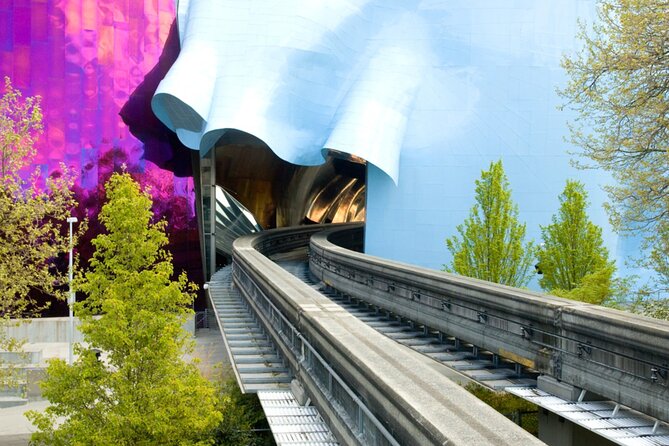
Once you’re done near the Space Needle, the game continues around the Museum of Pop Culture. This is a smart pairing because it keeps the cultural theme going while you keep walking through the same central zone.
For most people, the Museum of Pop Culture area is also where the walking starts to feel like “real sightseeing” rather than just puzzle-solving. Even if you skip any indoor time, the surrounding campus layout makes it easier to spot where you should be headed next.
This stop is also a reminder that your success depends on being able to read and follow directions on your phone while walking. If your screen is dim, your signal is weak, or your battery is low, this portion can feel tougher. Bring a charged device and a simple mindset: if you get stuck, pause first, then sort the app out.
Gates Foundation and Artist at Play: Rounding Out the Story
The next clue area is around the Bill & Melinda Gates Foundation. This stop changes the tone a bit. You’re moving from the spectacle of Seattle Center public art into a more institutional side of the city.
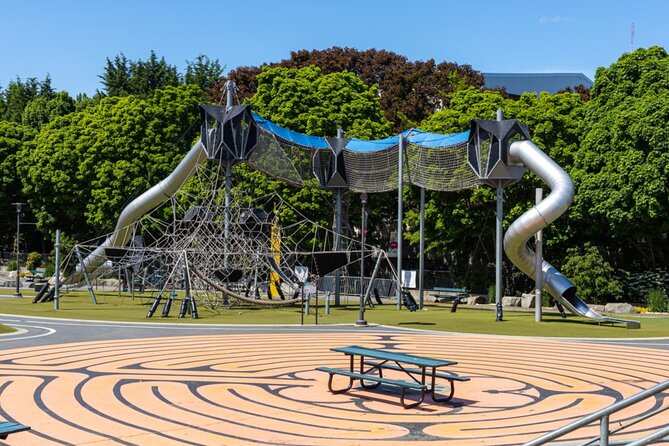
From there, you’re guided near the Artist at Play Playground Center. This is one of those stops that feels made for families and for anyone who just wants a breather. Even if you’re not traveling with kids, it’s a good “reset point” in the middle of a puzzle route.
The overall story structure makes more sense when you see the pacing: clue, walk, clue, linger. If you treat each stop like a waypoint—rather than trying to finish everything in a single sprint—you’ll probably enjoy the experience more. If you try to push through while reading directions on the run, errors have more impact.






Finishing at International Fountain: Where the Game Ends
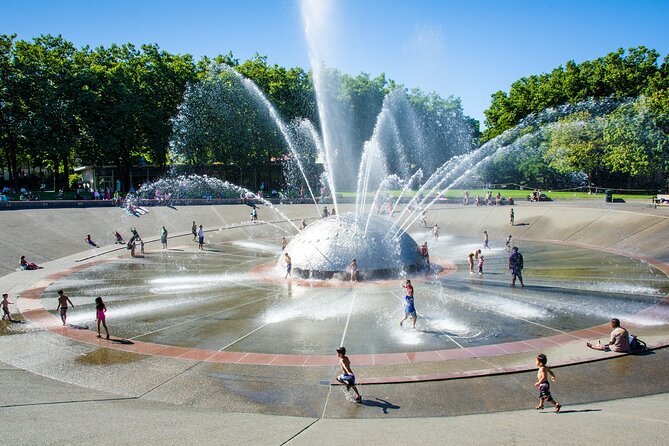
You finish around the International Fountain. That ending matters because it gives you a clear stop marker and a natural place to wrap up. It also lets you plan your next move—coffee, a quick bite, or heading back toward your lodging.
The game ends when you reach the finish point near the International Fountain, meaning the final stretch should feel like closure rather than another vague wandering phase.
Value Check: Is $7.20 Worth It for a Phone Puzzle Tour?

At $7.20 per person, this experience is priced like a budget activity and that’s the point. You’re paying for a structured walking route plus story-style prompts delivered to your phone. You’re also getting practical extras listed with the experience: a mobile ticket, group discounts, free for kids, and 24/7 customer support.
When it works smoothly, the value is strong. You’re getting a self-guided Seattle route that includes major landmarks and specific public art details without paying for an in-person guide.
But here’s the balanced truth: if instructions are hard to find, directions are unclear, or entrances don’t match the route shown on-screen, your $7.20 can feel like it’s buying frustration. In one disappointing case, the experience took far longer than the expected 60–90 minutes due to problems with directions, backtracking, and needing customer service help. The person also felt that the sights didn’t justify the time compared with what you could see on your own.
My take: this is worth it if you’re comfortable with self-navigation and you like puzzle-style exploration. It’s less worth it if you hate uncertainty, dislike walking for its own sake, or want a guaranteed route with zero chance of confusion.
Timing Reality: 60–90 Minutes on Paper, More in Real Life
The advertised duration is about 1 hour to 1 hour 30 minutes. That’s a reasonable estimate if:
- your phone loads instructions quickly,
- the walking route matches what you see outside,
- and you don’t need help from support.
If any of those go sideways, your time can grow fast. One account described finishing in over four hours, largely due to unclear directions, repeated stops for customer service, and backtracking. That’s an extreme case, but it signals a simple rule: build in a buffer.
If you’re planning dinner reservations, a show, or another timed activity later, don’t stack them immediately after the end point. Give yourself space to handle a detour and still have a calm finish.
Best-Case Stops vs. Where You Can Get Frustrated
The highlights list a set of locations that can make this game feel like more than just walking:
- Space Needle and Olympic Sculpture Park area
- Anne Frank chestnut tree
- Seattle Cloud Cover (glass bridge and sculpture)
- Museum of Pop Culture
- Bill & Melinda Gates Foundation
In a smooth run, these stops create variety: landmark photos, art details, and a couple of less-common sights. The game nudges you to notice rather than just pass by.
Where things can go wrong is mostly logistics:
- finding the instructions after you start,
- correctly downloading and using the game on your device,
- and following route directions that might not match how entrances are managed in the real world.
When directions send you down a path that looks like it leads to a pay area or a closed approach, it’s easy to waste time. In at least one documented instance, the route guidance appeared to require paying a significant amount to reach the next objective, forcing staff to help bypass the issue. That tells you the right play if you get stuck: stop guessing and contact 24/7 customer support.
Practical Tips to Make the Game Feel Easy (Not Like Work)
Here are the small moves that help this kind of phone puzzle feel fun:
- Check your instructions before you start walking. Don’t wait until you’re already across campus.
- Keep one device per person handy. If you paid for two, confirm how the app expects instruction access. If it asks for extra info on a second phone, you might end up using just the primary device.
- Plan for battery life. A dying phone turns clue-solving into guessing.
- Watch for direction reversals. If the app tells you to keep walking but the obvious route doesn’t match, pause and re-check rather than charging ahead.
- Use support early. If you feel stuck after a few minutes, contact help instead of spending another hour circling.
- Give yourself time for wandering. You’re allowed to linger at each clue area, so treat it as part of the experience, not a problem.
Who This Seattle Puzzle Fits Best
You’ll probably love this if you:
- want a low-cost, self-paced way to see Seattle Center and nearby landmarks,
- enjoy light problem-solving and following clue prompts,
- like taking breaks without feeling guilty,
- and don’t mind walking between major stops.
You might skip it if you:
- need a guided, guaranteed route with minimal friction,
- hate phone-based directions or worry about poor signal,
- or have a tight schedule where delays would ruin your day.
Should You Book the Seattle Time Travel Exploration Game?
Book it if you want a budget-friendly way to turn Seattle sightseeing into a story you can follow at your own speed. The mix of major landmarks and more specific details like the Anne Frank chestnut tree and Seattle Cloud Cover makes it feel like more than just a standard checklist.
Skip or be cautious if you strongly prefer turn-by-turn navigation with a human guide. This activity lives and dies by the clarity of phone instructions, and when those directions are off, the experience can run long.
If you do book, go in with the right expectations: it’s a phone game first, sightseeing second. When that matches your style, it’s a fun way to see the city.
FAQ
FAQ
How much does the Seattle Time Travel Exploration Game and Tour cost?
It costs $7.20 per person.
How long does the experience take?
It’s listed as about 1 hour to 1 hour 30 minutes (approx.).
Do I need a tour guide?
No. This is a self-guided city exploration game. You use your phone to play.
What app do I use for the game?
The game is delivered through the Questo app.
What landmarks and areas are included?
You’ll get clues around the Space Needle, Museum of Pop Culture, Bill & Melinda Gates Foundation, Pacific Science Center, Peace Garden, Sonic Bloom sculpture, Artist at Play Playground Center, and you finish around the International Fountain.
Can I explore at my own pace?
Yes. The experience is designed so you can stop for as long as you like at each clue area and continue at your own pace.
Is it available in English?
Yes, it’s offered in English.
Is there customer support if I get stuck?
Yes. 24/7 customer support is included.
Is this activity suitable for kids?
Yes. It’s free for kids.
What’s the cancellation policy?
You can cancel for a full refund up to 24 hours before the experience starts. If you cancel less than 24 hours before, the amount paid is not refunded.