REVIEW · SEATTLE
Small-group Mt. St. Helen National Park Tour from Seattle in SUV
Book on Viator →Operated by BARBIL TOURS · Bookable on Viator
A volcano day can sound intimidating. This one feels organized, with SUV pickup and a small max group size of 5, so you can actually hear the story as you go. You’ll pair big-picture learning at visitor centers with real crater views on a short hike, then end at Coldwater Lake for a quieter finish.
I like the built-in balance: geology and history indoors, then fresh air outdoors. You get a real sense of how Mount St. Helens works, thanks to hands-on displays, a live seismograph feed, and a timeline of the May 18, 1980 events.
The only real drawback to plan for is weather and timing: this tour is weather-dependent and runs long drive days, with about a mile or less of walking but several hours on the road.
In This Review
- Key things that make this tour click
- From Seattle: easy pickup, manageable drive time, real value
- Stop 1 at the Mount St. Helens Visitor Center: the seismograph part is the hook
- Coldwater Ridge Visitor Center: big views in about an hour
- The Eruption Trail from Johnston Ridge: short, paved, and built for views
- Coldwater Lake: the calm ending you didn’t realize you needed
- Price and logistics: what $375 really covers (and what to watch)
- Weather and timing: how to have the best Mount St. Helens day
- Who should book this (and who might want a different plan)
- Should you book Mt. St. Helens with this small-group SUV tour?
- FAQ
- How long is the Mount St. Helens tour from Seattle?
- What’s the group size on this SUV tour?
- Are pickup and drop-off included?
- Which admission tickets are included?
- Is the tour offered in English?
- Does the tour depend on weather?
Key things that make this tour click
- Small-group SUV day with room for personal questions (max 5 travelers)
- Live Mount St. Helens seismicity at the Visitor Center, plus a clear 1980 timeline
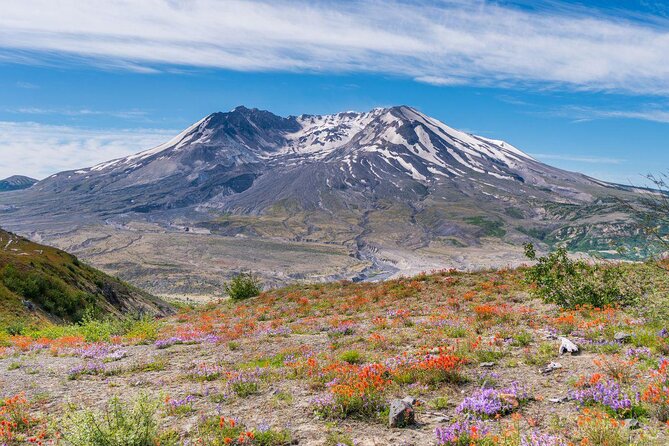
- Johnston Ridge Eruption Trail: barrier-free, paved, under a mile with big 360-degree views
- Coldwater Ridge Visitor Center: huge viewing payoff in a stop that’s about an hour
- Coldwater Lake side-trip for a calmer end, with trails and an electric-motor boat launch
From Seattle: easy pickup, manageable drive time, real value
This is the kind of tour that works well when you want a volcano day without turning it into a navigation project. You start with pickup from the Seattle area, and the company texts you with the approximate location and time. If you need a different pickup point, they can plan it if you request it ahead of time.
The schedule is driven by distance. Plan for a full day: it runs about 8 to 10 hours, and you’ll spend significant time in the SUV. The good part is that the drive isn’t dead time. It’s built around getting you to the best visitor stops, in the right order, with a guide who can connect what you’re seeing to what happened in 1980.
One thing I appreciate is the small-group feel. With up to 5 travelers, it’s easier to ask questions and adjust pacing when someone needs a bathroom stop, a photo moment, or extra time reading an exhibit. That shows up in guide experiences like Gurmit Singh supporting a family member with mobility needs, and others such as Paul, Chad, Dwight, and Mike earning praise for handling the day smoothly.
You can also read our reviews of more tours and experiences in Seattle.



Stop 1 at the Mount St. Helens Visitor Center: the seismograph part is the hook
Your first major stop is the Mount St. Helens Visitor Center, built to give you the story before you walk into the blast zone viewpoints. You’re looking at a long day start—around 3 hours of driving time from pickup to the Visitor Center area—but the exhibits are worth the jump.
Here’s what makes this stop feel different from a typical “look around and go” center:
- A step-in model of the volcano that helps you visualize what’s usually hard to picture from maps
- Life-size mannequins staged in the context of the eruption story
- A functioning seismograph plus a live feed showing current Mount St. Helens seismic activity
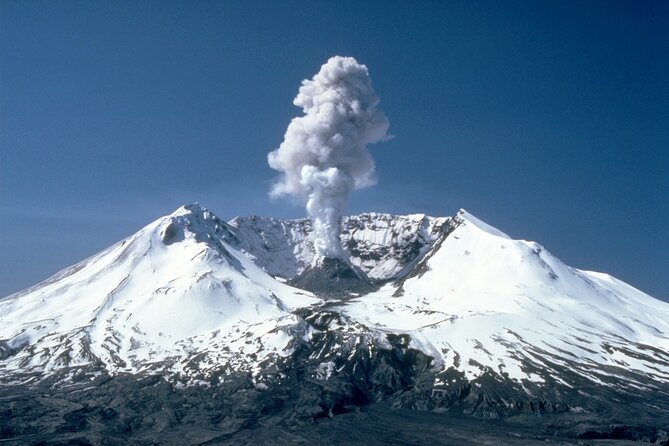
- A chronological timeline of the events leading up to the May 18, 1980 blast
- A theater program offered twice per hour (at :05 and :35 after)
You’ll also get a nature break outdoors with the Silver Lake area. There’s about a 0.6-mile trail with boardwalks over wetland sections, where you can spot different aquatic plants and migratory waterfowl depending on the season. It’s not long, but it gives your brain a breather before the next viewpoint leg.
The main consideration here is pacing. With a center plus outdoor trail time, you’ll want to arrive ready to do some reading and watching. If you prefer quick photo-only stops, this may feel like it has more “inside time” than you expected. Still, if you want meaning with your views, this is the part that sets the tone.
Coldwater Ridge Visitor Center: big views in about an hour
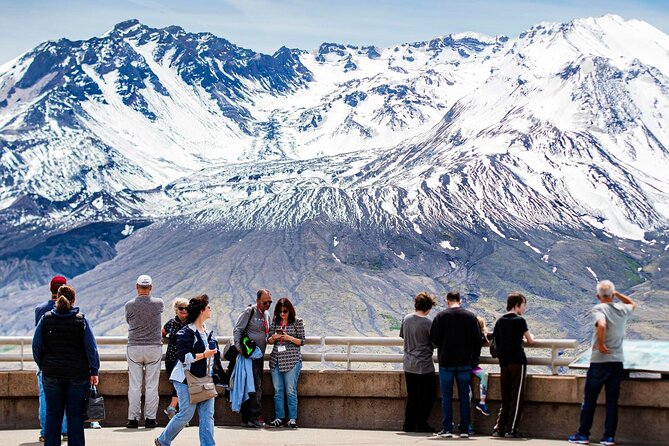
Next up is Coldwater Ridge Visitor Center. This is a strong payoff stop if you want fewer hours in one place and more time for views. It’s within the Mount St. Helens National Volcanic Monument area, and you’ll reach it roughly 45 miles east of I-5 along State Hwy 504.
This center is large—just over 24,600 sq. ft. across two floors—and it was built in 1993. The big practical benefit is that it’s designed for overlooking Mount St. Helens while still being close to recreation.
From here, you have easy access to Coldwater Lake, and the options listed around the lake include:
- Picnic areas
- A boat launch for non-motorized options and electric motors
- Accessible trails
- Fishing
- Restrooms and parking
The value of this stop is the reset it provides. You step back from the heavy eruption story and get a calmer sense of scale—how the monument area looks now, and how close daily life and recreation sit to a landscape shaped by 1980.
The Eruption Trail from Johnston Ridge: short, paved, and built for views
The highlight for many people is the Eruption Trail, a barrier-free paved hike of less than one mile from the Johnston Ridge Observatory area. This is one of the best “effort-to-reward” choices in the whole day: you’re not chasing a long trek, yet you get 360-degree views of Mount St. Helens and the surrounding blast zone.
You’ll also see interpretive kiosks along the trail. That matters more than it sounds. When you’re walking, you pick up details without having to “study the whole museum first.” The kiosks help you connect what the Visitor Center explained—timelines, causes, and effects—to what you can actually see in front of you.
A fair consideration: the trail itself is barrier-free, but viewpoints around the observatory area may vary in how easy they are to access. If you’re planning mobility needs or want the most comfortable route, tell your guide what matters most to you. This is one of those tours where asking early can save you frustration later.
Also, don’t overpack your expectations for a perfect crater view. Cloud cover happens, and this tour is weather-dependent, which brings me to the real-world planning part.
Coldwater Lake: the calm ending you didn’t realize you needed
On the way to or from the Johnston Ridge area, you’ll do a side-trip to Coldwater Lake. It’s a short distance off the highway, with easy logistics: parking plus paths to the lake and a restroom on-site.
Coldwater Lake is tied to the eruption story in a direct way—it was formed by an avalanche during the May 18, 1980 eruption. That’s the interesting twist: your walk ends in quiet, but the reason it’s here goes back to the biggest event in the area’s modern history.
Practical details matter because they affect your ability to enjoy the stop:
- There’s a boat launch, with electric motors only
- Trails go around the lake
- You need to keep your wrist-band on as proof that you paid to visit or hike the trails inside the Mount St. Helens National Volcanic Monument
That wrist-band detail is the kind of thing that can trip you up if you toss it in your pocket or forget it exists. I’d keep it on for the full lake portion, then you can relax.
This is also a great place for a slower moment after a long day of indoor learning and viewpoint walking. Even if the mountain is partially hidden by weather, the lake area gives you a softer ending.


Price and logistics: what $375 really covers (and what to watch)
At $375 per person, this isn’t a cheap add-on. So the question is value, not cost.
Here’s what you get for the price based on what the tour includes:
- Small-group max of 5, so you’re not stuck in a giant bus
- SUV transfers with pickup offered and drop-off back at the meeting point
- Mobile ticket
- Admission included for key learning stops, including:
- The Mount St. Helens Visitor Center
- The Eruption Trail area
- Coldwater Ridge Visitor Center and Coldwater Lake are listed as free stops (though you still need the wrist-band for monument trails)
So you’re paying for access, convenience, and interpretation—not just transportation. For many people, that’s worth it when you compare it to renting a car and trying to coordinate multiple stops on a weather-sensitive day.
What to watch: this kind of tour can be affected by minimum traveler requirements. If the minimum isn’t met, you’ll be offered a different date/experience or a full refund. Because it’s weather-dependent too, plan your Seattle schedule with some breathing room so you’re not forced into a tight timing window if the forecast turns.
Weather and timing: how to have the best Mount St. Helens day
Mount St. Helens is not a “set your phone and forget it” destination. This experience is explicitly weather-dependent, which affects visibility at Johnston Ridge and comfort in the outdoors.
For your planning, I suggest you think in two layers:
- The outdoor parts you can control (timing, clothing, pace)
- The outdoor parts the mountain controls (fog, rain, cloud cover)
Your hike component is short—under a mile on the Eruption Trail—so footwear matters more than endurance. But the day still involves several stops and long drives between them. I’d come prepared for quick changes: layers you can add/remove and a light rain shell if conditions shift.
Timing-wise, expect a day that starts early enough to justify the drive time, then flows through visitor center learning and viewpoint walking, with Coldwater Lake near the end. It’s exactly the sort of itinerary where getting cranky doesn’t help. The best move is to treat it like a long guided lesson with a few outdoor breaks, then enjoy the views when they’re there.
Who should book this (and who might want a different plan)
This tour is a great fit if:
- You want a small-group day trip rather than a bus tour
- You care about the science and story behind what you see
- You prefer a short, paved hike instead of long trails
- You want pick-up and drop-off so you can focus on the experience
It might not be ideal if:
- You strongly prefer self-driving and setting your own stop lengths
- You want an all-photo, minimal-reading day
- You’re very sensitive to long drive time since the day runs about 8–10 hours
If mobility is a concern, pay attention to the fact that the Eruption Trail is barrier-free. And based on guide support described in real-world experiences—like Gurmit Singh working well with a family member who had mobility issues—it’s smart to share needs early so your guide can plan around them.
Should you book Mt. St. Helens with this small-group SUV tour?
I’d book it if you want an organized, interpretive Mount St. Helens day without the stress of coordinating multiple stops in a single car day. The mix of live seismicity displays, a structured story timeline, and a short barrier-free viewpoint walk is a strong combo—especially at this group size.
I’d hesitate only if you’re chasing a specific crater-view moment at any cost. Weather can limit visibility, and this tour is built with that reality in mind through its weather-dependent operation. If you can be flexible with your travel day, you’ll get more out of the learning centers and the shorter hikes no matter what the mountain hands you.
If you do book, keep your eye on the texts (for pickup timing) and wear your wrist-band correctly at Coldwater Lake. Small details, big payoff.
FAQ
How long is the Mount St. Helens tour from Seattle?
It runs about 8 to 10 hours. The day includes multiple stops, with driving time built in between visitor centers and the Coldwater Lake side-trip.
What’s the group size on this SUV tour?
The tour has a maximum of 5 travelers, which keeps the day feeling more personal than large bus-style trips.
Are pickup and drop-off included?
Pickup is offered, and you’ll receive a text with the approximate pickup location and time. The tour ends back at the meeting point, with drop-off included.
Which admission tickets are included?
Admission is included at the Mount St. Helens Visitor Center and for the Eruption Trail portion. Coldwater Ridge Visitor Center and Coldwater Lake are listed as free stops, though you may need a wrist-band for monument trails.
Is the tour offered in English?
Yes, the tour is offered in English.
Does the tour depend on weather?
Yes. The experience requires good weather, and if it’s canceled due to poor weather, you’ll be offered a different date or a full refund.