Six women can sound like a headline. Here it’s the anchor for a walking tour that turns downtown Seattle into a storybook of WWII-era street life. You’ll walk with historian guide Carter, stopping for visible remnants and real anecdotes tied to an Oahu red-light district and the people who pushed back during the war years.
Two things I especially liked: the focus on the women’s agency (not just gossip), and the way the tour uses small, concrete stops—tattoo parlors, bars, and former brothel sites—to make history feel present. I also liked the pacing: about 90 minutes, done as a compact downtown loop that fits easily into a day of sightseeing.
One thing to consider: the subject matter is adult by nature, so it’s not recommended for kids aged 16 and under. If you prefer purely upbeat history, this one may feel too gritty for your taste.
In This Review
- Key things to know before you go
- A 90-Minute Walk Through Seattle’s WWII-Era Side
- The Small-Group Size That Makes Stories Easier to Follow
- Pioneer Square First: Where the Tour Gets You Oriented
- Tattoo Parlors, Bars, and Former Brothels: What You Actually See
- The Chinatown Corners and the Power of Place
- The Strike for Better Pay: The Part That Hits Hardest
- How to Plan Your Day Around a Downtown Loop
- Who This Tour Is Best For
- Accessibility and Practical Comfort on a Walking Tour
- Price and Value: Is $29 Worth It?
- Should You Book Six Women: A Seattle History Tour?
- FAQ
- How long is the Six Women walking tour?
- Where does the tour start and end?
- What is the price?
- How far do you walk?
- Is the tour wheelchair accessible?
- How big is the group?
- What’s included in the ticket price?
- What is not included?
- Is confirmation provided after booking?
- What are the cancellation rules?
Key things to know before you go
- Historian guide Carter keeps the storytelling grounded and focused on the people behind the myths.
- Tattoo parlors, bars, and former brothels give you physical landmarks to connect with the stories.
- WWII red-light district and the strike for better pay is a core theme, not a side note.
- Small group size (up to 10 travelers) makes it easier to hear details while you walk.
- About 1 mile total with part of the route described as roughly half a mile early on.
- Wheelchair accessible and with service animals allowed, it’s built for more visitors than many downtown tours.
A 90-Minute Walk Through Seattle’s WWII-Era Side
This is one of those tours where the city feels different after you leave. You’re starting in downtown Seattle and moving through areas tied to Chinatown sights, but the story focus leans toward a WWII-era red-light district connected to Oahu. That contrast is part of the fun—history doesn’t always stay inside the exact borders you expect.
What makes the tour more than a dark-street-themed walk is the emphasis on how the women organized and demanded better pay. It’s not just about what happened; it’s about what they pushed for, and how that shaped the social world around them.
You’ll also learn the difference between a rumor and a lived experience. Even without names of every person, the tour keeps returning to human choices: who had power, who didn’t, and what it cost to ask for change.
You can also read our reviews of more historical tours in Seattle


The Small-Group Size That Makes Stories Easier to Follow
A major value here is the group size. The cap is up to 10 travelers, which usually means you can actually hear the guide without craning your neck or losing key details.
It also helps with the pacing. A walking tour lives or dies on timing—how often the group stops, how long you linger at each corner, and whether you can ask questions. With a smaller group, you’re more likely to get the full thread of the narrative instead of playing catch-up.
And since the tour is about 1 hour 30 minutes, you’re not signing up for a half-day commitment. This works well if you like history but don’t want it to swallow your whole schedule.
Pioneer Square First: Where the Tour Gets You Oriented
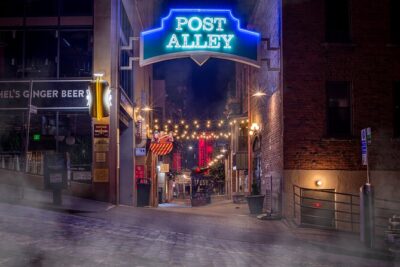
Your tour starts at 700 1st Ave, Seattle, WA 98104, and Pioneer Square is the first big named point. That matters because Pioneer Square is a natural “begin here” area—easy to locate, simple to meet up at, and good for setting the stage.
From there, you cover a portion of the route that’s described as roughly half a mile early on, before the walk continues through the downtown sights. That structure is useful. You get context first, then you start seeing the tour’s adult-history landmarks with less confusion and more payoff.
You should expect a steady walking pace, with stops for explanation. If you need frequent pauses, you’ll want to mention it early so Carter can steer the group timing.
Tattoo Parlors, Bars, and Former Brothels: What You Actually See
This tour is built around street-level places you can spot as you walk. The core theme includes tattoo parlors, bars, and former brothel sites, which turns the story into something you can point at.
That’s the practical magic: the tour doesn’t rely only on verbal history. When you’re standing near a business that still exists, it’s easier to imagine the past layers without slipping into pure guessing.
A good warning too: because the subject is a WWII-era red-light district, the stops are chosen to match the topic. That means the vibe is historical but not “cute.” If you’re sensitive to adult themes, take that into account before you go.
The Chinatown Corners and the Power of Place
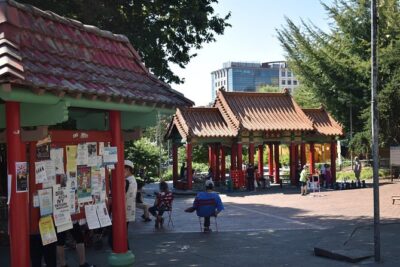
Another highlight is the time spent around Chinatown sights. Even when you already know a city, walking through a neighborhood with a specific historical lens can change what you notice.
Chinatown areas tend to reward slow looking—signage, blocks that feel like they have a longer story than the buildings themselves, and streets that connect different eras. The guide uses that environment to shape the narrative, so you’re not just passing through; you’re learning how the neighborhood fit into larger wartime and social currents.
Also, because the tour is described as a small-group walk, you’re less likely to get separated from the story. You’ll be able to keep track of what’s being explained as you move from corner to corner.






The Strike for Better Pay: The Part That Hits Hardest
The most meaningful thread in this tour is the story of women who went on strike for better pay. That detail is more than a dramatic plot point. It reframes the common view of wartime prostitution from pure victimhood or sensationalism into a labor-and-rights story.
I like that the tour treats this as action, not just suffering. It helps you understand why this history matters beyond its era. When you learn how people organized under pressure, it connects to bigger questions: who gets protected, who gets exploited, and what happens when someone refuses to accept the rules.
And even if you don’t know anything about WWII red-light district history going in, the tour’s emphasis on the women’s demands gives you a clear storyline to follow.
How to Plan Your Day Around a Downtown Loop
This is a walking tour, so timing matters more than anything else. It’s approximately 90 minutes and covers about 1 mile overall, with at least part of the early segment described as around half a mile.
That makes it easy to pair with other downtown plans. If you’re already headed toward Pioneer Square or spending time in the Chinatown area, it plugs in naturally. If your day is packed, this is still a realistic block of time.
One small downside to note: the tour does not include transportation to or from attractions. You’ll need to handle getting to 700 1st Ave and getting home afterward on your own. The tour ends back at the meeting point, which is convenient if you’re using public transit or staying nearby.
Who This Tour Is Best For
This tour is a great match if you like history with real edge. You’ll get a different Seattle-centered experience style, guided by Carter, focused on how women shaped a progressive city narrative through their choices and struggles.
It’s also a strong choice if you enjoy tours that use the built environment. If you like standing in the street and letting the story attach to what you can see, you’ll feel satisfied faster.
It’s less ideal if you want a kid-friendly history outing. The tour explicitly says it’s not recommended for children aged 16 and under, so plan accordingly.
Accessibility and Practical Comfort on a Walking Tour
The tour is described as wheelchair accessible, and it allows service animals. That’s a meaningful detail for planning, since many downtown walking tours are only partly accessible.
You’ll still be walking, so if you use a wheelchair or mobility device, check the walking expectations in your planning mindset: you’re doing around a mile total. The good news is that the route is presented as wheelchair accessible, so the company is accounting for that from the start.
Also, since it’s near public transportation, getting there doesn’t have to be a logistical headache. You can plan it without needing a car.
Price and Value: Is $29 Worth It?
At $29, this isn’t an economy tour price, and it also isn’t a premium, multi-hour museum day rate. The value comes from how much story you get per minute and how small the group is.
You’re paying for a professional guide (Carter and the team at Tours By Carter) plus the time spent walking, stopping, and connecting adult WWII-era street history to real-world places. For $29, you’re essentially buying a focused, human-scale experience rather than a general walking overview.
In plain terms: if you’re the kind of visitor who likes history that’s specific and story-driven, this price feels fair. If you mostly want scenic sightseeing with zero adult material, you’ll likely get more value from a different style of tour.
Should You Book Six Women: A Seattle History Tour?
I’d book it if you want a guided downtown walk that treats wartime red-light history with a serious, human focus and brings the story back to the streets. The biggest selling point for me is the combination of small group size and Carter’s storytelling, which keeps the tour engaging instead of just factual.
I’d skip it if you’re traveling with younger kids, or if adult themes will make you uncomfortable. This isn’t the right pick for a family history outing.
If you’re on the fence, think about this: it’s only about 90 minutes. That’s enough time to decide if the subject matter and the guide’s style work for you, without losing half a day to something you don’t enjoy.
FAQ
How long is the Six Women walking tour?
It’s approximately 90 minutes (about 1 hour 30 minutes).
Where does the tour start and end?
It starts at 700 1st Ave, Seattle, WA 98104, USA and ends back at the meeting point.
What is the price?
The price is $29.
How far do you walk?
The tour covers about 1 mile, and the Pioneer Square portion is described as about half a mile.
Is the tour wheelchair accessible?
Yes, the tour is described as wheelchair accessible.
How big is the group?
The activity has a maximum of 10 travelers.
What’s included in the ticket price?
A professional guide is included.
What is not included?
Transportation to and from the attractions, and hotel pickup/drop-off are not included.
Is confirmation provided after booking?
Yes, confirmation will be received at the time of booking.
What are the cancellation rules?
You can cancel for a full refund if you cancel at least 24 hours in advance of the experience start time. If you cancel less than 24 hours before, the amount paid is not refunded.